Mincecore
Mincecore, also written mince-core, is a raw, punk-rooted form of old-school grindcore built around musical simplicity, DIY practice, and socially and politically conscious lyrics. Belgian band Agathocles coined the term in the late ’80s to distinguish their music from the sexist, macho, and gore-obsessed direction found in parts of the grindcore scene. In its original sense, mincecore describes a sound, an ethic, and a politics rather than a drum beat alone.
What is Mincecore?
Mincecore strips grindcore back to short songs, simple punk riffs, raw production, harsh vocals, and a bouncing rhythm commonly called the mince beat or mince stomp. It draws heavily from the first wave of grindcore, noisecore, crust punk, anarcho-punk, and fast hardcore rather than the technical death metal approach that later became common in parts of the genre.
The political meaning is just as important. Agathocles used the name to reaffirm grindcore’s roots in protest, autonomy, and DIY culture while openly rejecting sexism, homophobia, fascism, and the music business. Later bands have sometimes used “mincecore” only as a description of the sound, but that is narrower than Agathocles’ original definition.
Sound, Practice, and Politics
A band does not become mincecore simply by playing the mince beat. In the original Agathocles sense, raw old-school grind, politically engaged lyrics, low-budget DIY production, and an anti-commercial approach belong together.

Why Is It Called Mincecore?
Agathocles began using the term near the end of the ’80s, when pornographic and gore-based imagery was becoming more visible in grindcore. The band did not want listeners to assume that every grind band shared the same imagery or politics. “Mincecore” gave Agathocles a separate identity while reconnecting its music to the socially conscious origins of grindcore and anarcho-punk.
The word “mince” has accumulated several explanations, including references to chopping or grinding meat and the band’s endless use of phrases such as “keep mincing.” However, no clear primary source establishes the claim that Agathocles selected it from slang about feminine or queer mannerisms. Jan Frederickx’s own explanations consistently focus on politics, DIY ethics, and opposition to sexist and homophobic grind.
Agathocles made that meaning explicit in the song “Mince-Core” from Humarrogance (1997). Its refrain defines mince as “death to homophobia and sexism,” while the complete lyrics reject discriminatory macho posturing and describe the style as anarcho-grindcore.
In an interview published by Le Scribe du Rock in 2020, Agathocles explained the term in full:
“We got the idea to call ourselves a mincecore band in the end of the 1980s. No, it was not meant as a joke. In the end of the 80s, many bands started to use porn/gore image in grindcore, and many people thought that Agathocles were also part in this porn and gore thing, just because we played grindcore. We have nothing to do with that and wanted people to know that Agathocles stands for the initial ideology of grindcore, which is based on DIY-ethics, autonomy, social and political awareness, anarcho-communist ideology, anti-music business approach, etc. So from that moment, we called our stuff mincecore. Mincecore is just old school minimalistic grindcore which is socially and politically aware, DIY and anti-music business.”
Agathocles, interviewed by Le Scribe du Rock

What Does Mincecore Sound Like?
- The mince beat: A simple, bouncing kick-snare pattern, often played at a mid-tempo punk pace and sometimes compared to a two-step or polka rhythm.
- Blasts and sudden changes: The stomp is commonly broken up by short blast beats, fast hardcore attacks, or slower crusty passages.
- Minimal riffs: Short, repetitive guitar parts favor impact and momentum over technical playing, complex structures, or solos.
- Raw bass and production: Distorted bass, abrasive guitar tone, and rough recordings are part of the sound rather than defects to be polished away.
- Contrasting vocals: Low growls and high screams often alternate or overlap. Pitch-shifted gutturals are more characteristic of later mincegore.
- Short, direct songs: Many tracks last only seconds or a few minutes, although the style is not restricted to one song length or tempo.
Mincecore is therefore not simply “slow grindcore.” Agathocles recordings can be frantic, noisy, crusty, or almost death metal in weight. The recurring stomp, stripped-down construction, and punk-first attitude are more consistent markers than a fixed tempo.
Agathocles have cited old-school grindcore and extreme fast hardcore as their main foundation, with death metal and crust also entering the mix. The wider musical lineage includes bands such as Lärm, Discharge, Confuse, Doom, Extreme Noise Terror, early Napalm Death, Repulsion, Siege, and Terrorizer.
Agathocles and the Spread of Mincecore
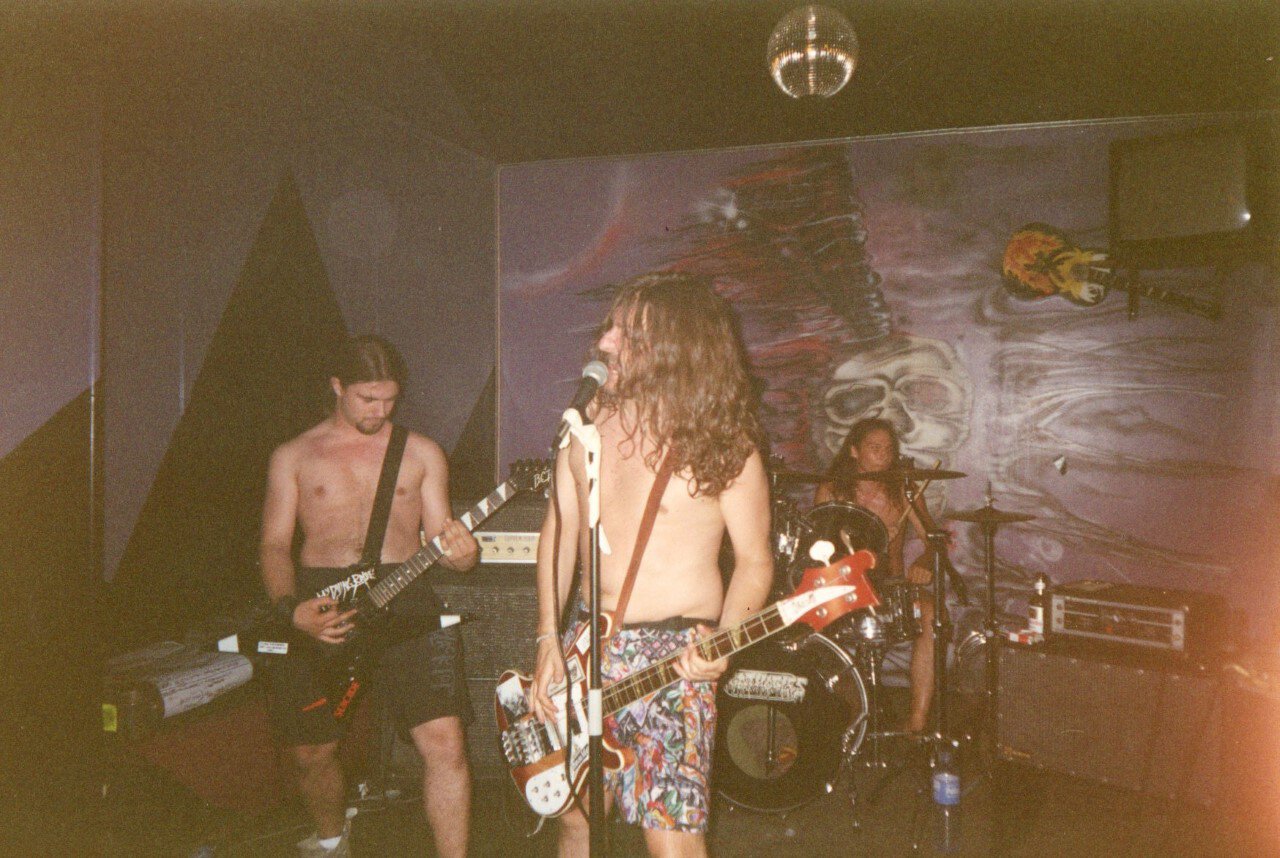
Agathocles trace their history to Mol, Belgium, in 1985. The term mincecore followed near the end of the decade, and the band’s early tapes, split EPs, and international correspondence helped it travel far beyond Belgium. Releases such as Theatric Symbolisation of Life (1992), Razor Sharp Daggers (1995), Thanks for Your Hostility (1996), and Humarrogance (1997) established the basic vocabulary.
The band’s enormous number of splits is part of the story. Sharing a record with another group allowed bands and tiny labels from different countries to pool costs, exchange audiences, and build relationships without conventional industry support. This release culture became as recognizable as Agathocles’ sound and was copied by later mincecore bands.
In a 2025 DIY Conspiracy interview, Jan Frederickx said Agathocles still had no official Bandcamp, Spotify, or other digital music account and considered uploads on those services bootlegs. That refusal is a particularly uncompromising continuation of the anti-music-business position behind mincecore.
The sound spread through bands such as Rot in Brazil, Unholy Grave in Japan, Violent Headache in Spain, Malignant Tumour in the Czech Republic, Dahmer in Canada, and many others. Winnipeg’s Archagathus, formed in 2005, deliberately followed the Agathocles blueprint through raw recordings and a flood of split releases. Even its name is a reference to Archagathus, the son of the ancient ruler Agathocles of Syracuse.
What is Mincegore?
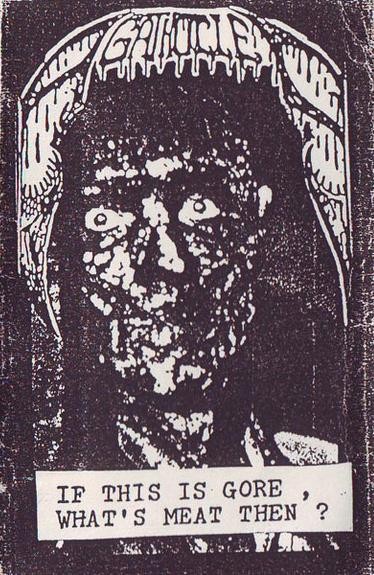
Mincegore is an informal crossover between mincecore and goregrind. It retains the bouncing mince beat, short songs, raw production, and prolific split-release culture while adding lower tuning, pitch-shifted guttural vocals, and goregrind’s grotesque sound and visual language.
The label became much more visible during the 2010s rather than appearing at one exact, universally agreed moment. Oakland band Haggus, formed in 2014, became its best-known representative by combining the sound and politics of mincecore with old-school goregrind. Crucially, the band retained an antifascist and anti-misogynist position instead of reproducing the pornographic violence and bigotry found in parts of pornogrind and goregrind.
Hyperemesis, Meatus, Cystoblastosis, Cryptophthalmos, Pyosis, and other projects occupy different points between mincecore, goregrind, and gorenoise. Because the boundary is loose, not every band accepts “mincegore” as a separate genre.
Does Mincecore Have to Be Political?
Some contemporary bands adopt the riffs, mince beat, masks, or gore imagery without Agathocles’ politics. That usage exists, but it remains contested. Under the original definition, political awareness and DIY practice are not optional decorations added to the music. They are part of what makes it mincecore.
Mincecore and Mincegore Bands
Foundational and Early Mincecore
Agathocles, Rot, Unholy Grave, Reign of Terror, Malignant Tumour, Abortion, Violent Headache, Dahmer, Intestinal Disease, Cornucopia, Ulcerrhoea, Mesrine, Proletar, Sakatat, and Disturbance Project.
Later and International Mincecore
Archagathus, Agamenon Project, Death Toll 80k, Agitate, Violent Gorge, Akurakus, Bloodsuckers, Arroyo, Lt. Dan, Axed Up Conformist, Napalm Dread, Heraclides, Riot States, Onearmleft, Creative Waste, Pro-Past, Total Hipster Crusher, Scum of the Earth (SxOxTxEx), One Day in Fukushima, Badsystem, Orrör, Dispepsiaa, Brainspit, Kerenaneko, Regurgitasi, Obliteração, No Prejudice, Human Humus, and Raw Noise Apes.
Mincegore and Gore-Leaning Mince
Haggus, Hyperemesis, Meatus, Cystoblastosis, Cryptophthalmos, Pyosis, Disemboweler, Rotting Rex, Vomit Contest, Voreaphilia, Camphora Monobromata, Cistemized Vio-Lence, Fleshmangler, Weedeous Mincer, and others.
These categories overlap, and some bands move between mincecore, grindcore, goregrind, noisecore, and crust depending on the release. The term is most useful as a description of a shared lineage rather than a rigid checklist.
Essential Mincecore Listening
Agathocles’ “Mince-Core,” from Humarrogance (1997), works as both a musical example and a direct statement of the ideas behind the term.


