The History of SHARP: Marcus Pacheco on Skinheads Against Racial Prejudice
Zora Burden talks to Marcus Pacheco, founder of SHARP, about reclaiming the skinhead subculture, confronting racism in 1980s NYC, and challenging media myths about skinheads that are still prevalent today.

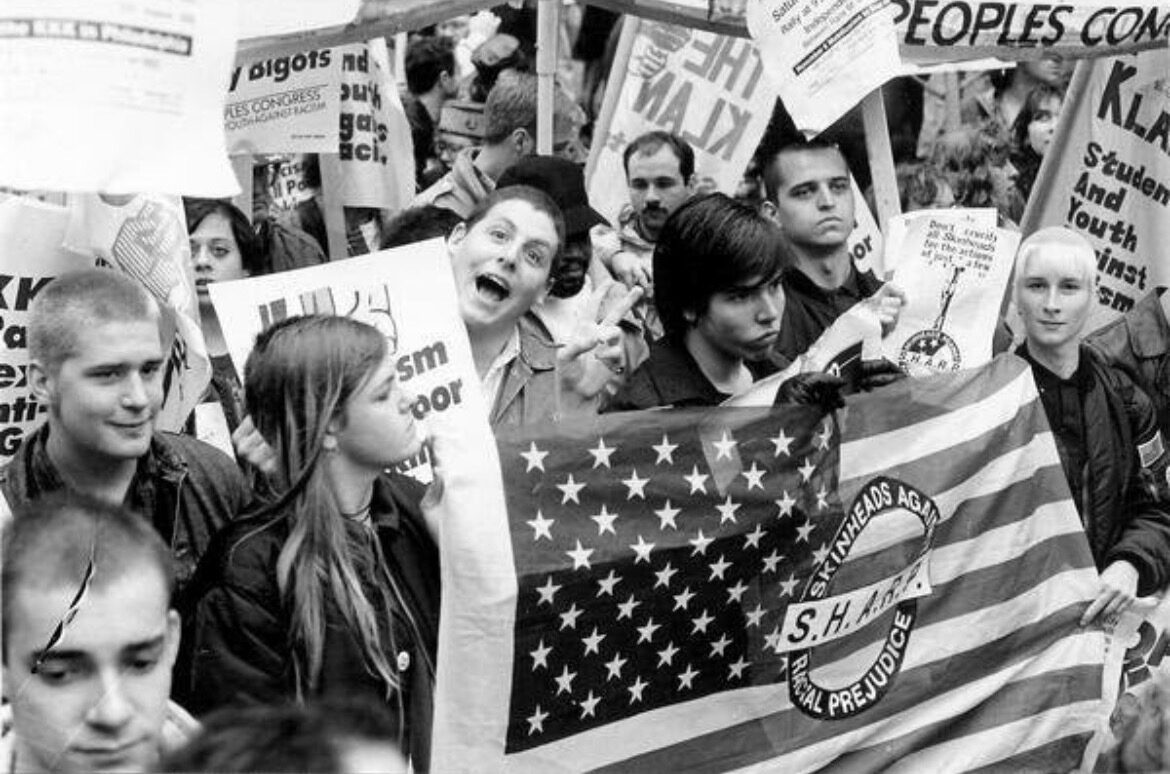
SHARP (Skinheads Against Racial Prejudice) was founded in 1987 in New York City by Marcus Pacheco. SHARP consists of those who want to reclaim the original history of skinheads, which was racially diverse and inclusive, rooted in the British working class and Jamaican culture. Marcus wanted to create a way for himself and others to identify as non-racist skinheads and to fight against the emerging neo-Nazi skinheads of the ’80s, who were trying to appropriate and distort the skinhead culture for themselves. SHARP is not an organization but an identity and a unifying movement against racism, taking up the fight against white supremacists and fascists.
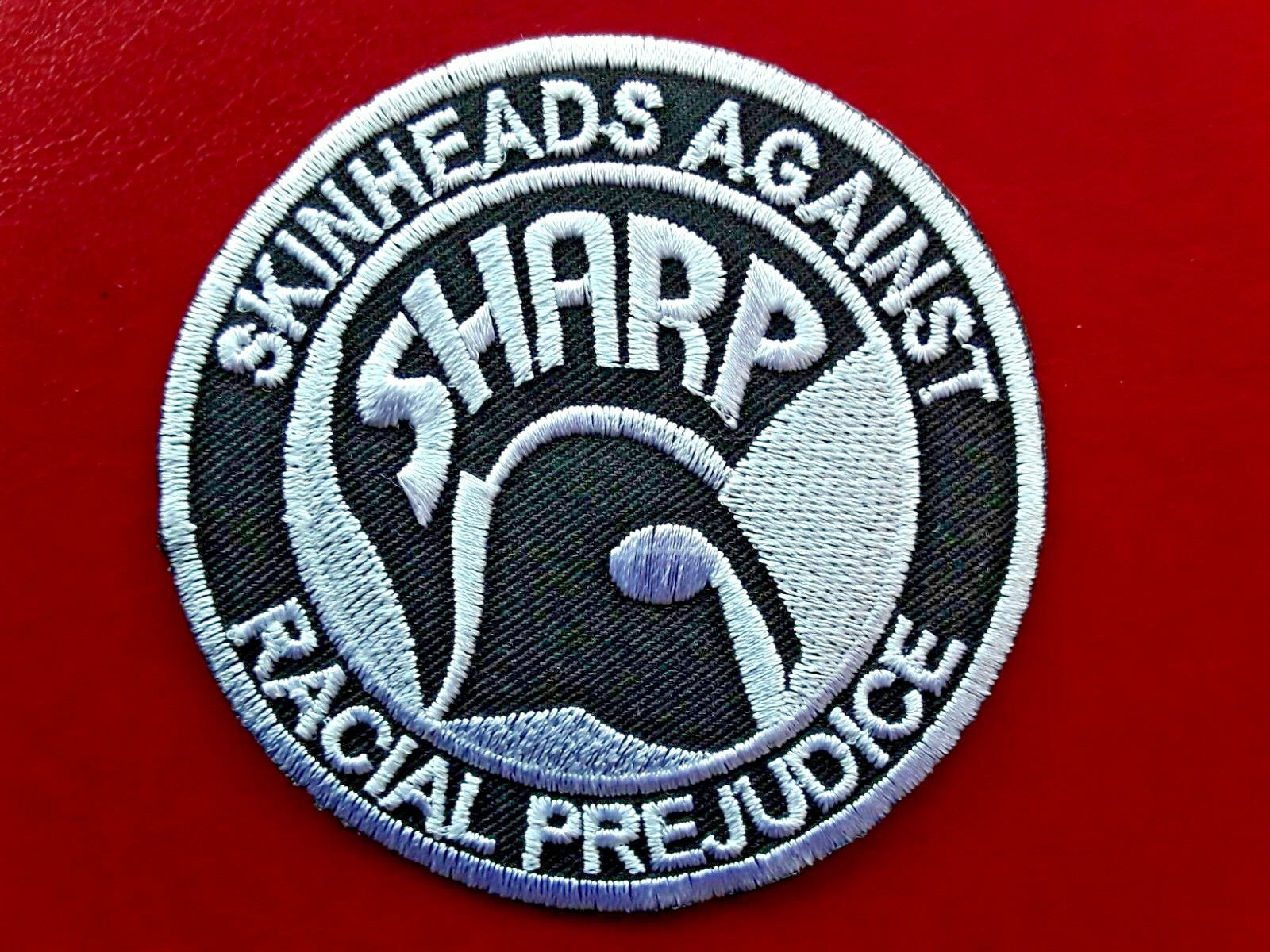
With the support of Roddy Moreno from the band The Oppressed, who embraced the SHARP ideology and logo into his record labels in Britain, SHARP quickly became an international movement and is still active today. Those who identify as SHARP should be acknowledged for their advocacy in racial unity and equality. The false idea that skinheads are racist or neo-Nazis was a result of the media and misinformation within society, which created stereotypes that continue to persist today. Being SHARP means educating people on the historically factual story of skinhead culture as anti-racist.
I first met Marcus in the early ’90s when he had founded his infamous tattoo studio in San Francisco, Primal Urge. He quickly rose to prominence as a renowned tattoo artist and is still tattooing. Marcus is very dedicated and passionate about his work, incredibly smart, funny, and always a pleasure to talk with. In the interview, Marcus talks about the history of skinheads, his experiences as a skinhead, the founding of SHARP, the notorious Geraldo neo-Nazi skinhead show in 1988, and his gratitude for those who inspired him throughout his life.
Zora Burden: Will you talk about what your life was like growing up and how it informed your views on racism?
Marcus Pacheco: I was born in Manhattan, New York City, in 1968, and I was raised by my grandmother from my father’s side of the family, which is my Puerto Rican half. My mother is English, so I don’t know her very much. I only knew her briefly until I was one and then stopped hearing from her by the time I was four or five. I don’t really have any connection to that side of my family.
But on my Puerto Rican side, I grew up in a very multiracial family because we also have a Cuban side, a Polish side, and an African American side to my family. South America is also represented. I really like being Puerto Rican. I remember while in Puerto Rico, there was a statue on the beach in the town I lived in that was commemorative of the history of Puerto Rican culture. It was three arms going up into the air clasping each other. One was Black, one was brown, and one was white because it was commemorating the three main groups that make up the Puerto Rican background.
In my family, there’s every shade. I’m probably the whitest person in my family, but I’ve seen people treat my grandmother poorly because she’s a small brown lady. She got treated disrespectfully. That’s one of those things that’s always a gauge I have in the back of my mind. How a person would treat my grandmother is how I’m going to look at them. So, if they have some kind of weird belief system that would want to get rid of her, then I’m against them and that bullshit.
We moved around a lot. I lived in New York in a few different places like Brooklyn, Manhattan, and Queens. I also lived in New Jersey in a few places and in Puerto Rico a couple of times. After New York, I moved out to the West Coast, to California, in 1991.
ZB: Will you give some history of skinheads? What introduced you to the skinhead subculture?
Marcus: The skinhead subculture started in the late 1960s in the UK, and it was an offshoot or evolution from the mod subculture of the ’60s. If anybody wants to know what the culture was like, just think of the movie Quadrophenia. The mod subculture was based around fashion and music, going down to the beach on bank holidays in the thousands and fighting on the beach.
When the mods started fading, the skinhead subculture came from that, and it brought into it fashion and music influences from Jamaica. Skinheads still listened to soul, but they were more into ska and rocksteady from Jamaica from the late ’60s and so were obviously not racist because they’re listening to Black music. The skinhead culture was really influenced by what they were seeing on the Jamaican artists, like the short, cropped hair with the side part, the early traditional skinhead style. I used to do that with my hair when I’d crop it.
When I got into the whole thing, I was influenced by a guy named Ed Hurley, who is 10 years older than me. I became friends with him and his girlfriend Dierdre. He was actually one of the first skinheads in New York City, so we’re talking the late 1970s, early ’80s. I think, infamously, Harley Flanagan from the Cro-Mags was the first proper English-type skinhead in New York City at the time. He was in a band that played in the UK and he made friends with a bunch of skinheads there and they turned him onto the look. He came back to New York wearing Doc Martens and cropped his hair. Back then you couldn’t get Docs in New York. You’d have to order them from somewhere in the UK, and that was a big part of the style because we’re talking about a subculture that’s based primarily on music and fashion.
When I got into it, my friend Eddie was more of a traditional skinhead, even though I don’t think that term was really being used at the time. The skinhead thing faded out in the early ’70s and then there was a revival in the late 1970s when punk rock was going kind of south and dying out. There was the birth of Oi! and the revival of ska, the first revival, which happened in ’79 or ’80 in UK with the 2-tone stuff. All the 2-tone bands like The Specials and The Selecter. And bands like Bad Manners and Madness. All that was around the same time.
Because of the economy, a lot of people and families were out of work and the political situation in Britain had the National Front gaining power. They were racists basically and they saw an opportunity to pull in people from the skinhead subculture because a lot of skinheads were working-class youth. That’s when all the white power nonsense got into the scene.
When I got into being a skinhead in New York, the skinheads that I saw around me at that point were all mixed. There were a lot of Black skinheads and Latino skinheads, and my friend Eddie was Irish. He turned me onto the 2-tone music and all the stuff that led me down the path to falling in love with Jamaican music from the 1960s and the early ’70s. The neo-Nazi stuff was not part of it, no more than it was part of the punk rock scene. The Dead Kennedys had the song “Nazi Punks Fuck Off” and I remember being a kid and hearing that, so obviously there was some of that kind of fascistic bullshit working its way into all kinds of underground scenes, whether it was punk rock or the metal scene or the skinhead subculture.
It wasn’t necessarily something that was inherent to the skinhead subculture. It was just something that was inherent to the world we were living in at the time, otherwise I wouldn’t have gotten into the skinhead scene in the first place. I wouldn’t get involved in anything racist. Almost immediately after getting into it, I wanted to make sure that I was identified as a non-racist person, so that’s why I started SHARP. I came up with the acronym, made flyers, and then went out with my friends to start handing them out and spreading the word at shows.
ZB: What is the history of the skinheads in relation to proletariat ideals and the aspect of race within the struggles of unemployment and immigration during the 1960s?
Marcus: In the late 1960s skinhead culture, in ’68 or ’69 when it was at its height, it was a non-racial thing. There were Black skinheads at the time too, so it was a very Black-and-white British thing. But in the world they were existing in, there were a lot of immigration issues. Some of that spilled over into these teenagers. Remember we’re talking about teenage kids and a subculture fad at the time with thousands and thousands of skinheads in 1969. It’s not quite an underground thing like it was when it was revived in the 1980s or like punk rock was underground. This is more of a big thing like with the mods. Instead of thousands of mods on the beach fighting each other or causing trouble, it was thousands and thousands of skinheads.
But we’re talking about teenagers, so it’s not surprising. I’m not excusing it, but it’s not surprising that some of them indulged in anti-immigrant rhetoric, even the Black skinheads, but you know everybody else was doing it too. I’m not saying that’s a justification, I’m just saying that it wasn’t something unique to that subculture. It just wasn’t something that was inherent to one subculture.
The 1960s included the Windrush generation. This was when Jamaicans were allowed to immigrate to England. The first wave of immigrants from Jamaica to England was the Windrush ship, so they call that the Windrush generation. But Jamaicans were embraced by the skinhead subculture, that’s what the whole thing was about. So, it wasn’t the Jamaicans they were mad about. In English culture in the late ’60s, early ’70s, it wasn’t the Jamaicans they were against coming into the country, it was the Pakistanis and people from the Middle East and from Asia. That was their sort of target du jour, kind of like how we’re going through that with Latinos right now in the US. It’s kind of arbitrary. As soon as they’re done with Latinos, they’ll go after the next group. It kind of doesn’t matter to them, they just need a group to go after and people to hate, same kind of thing.
It wasn’t the Jamaicans so much that they were going after, at least not the kids in the skinhead subculture because they all listened to Jamaican music. A lot of the Black kids were skinheads but also rude boys, which was another big influence on the skinhead subculture in the late ’60s.
The whole rude boy subculture, that’s also based on the Jamaican music scene from the late ’60s, early ’70s and it carried over into the punk rock stuff. The punk rockers were huge into dub reggae, which was the kind of reggae that was coming out of Jamaica at the time. A big part of that was Don Letts, a guy who came from Jamaican roots. He was a DJ at one of the original punk clubs in England and because there were like three punk records at the time, you couldn’t just play punk as a DJ. So, he would play lots of roots reggae and mostly dub. I think that’s a big part of why the punk rock scene embraced dub reggae.
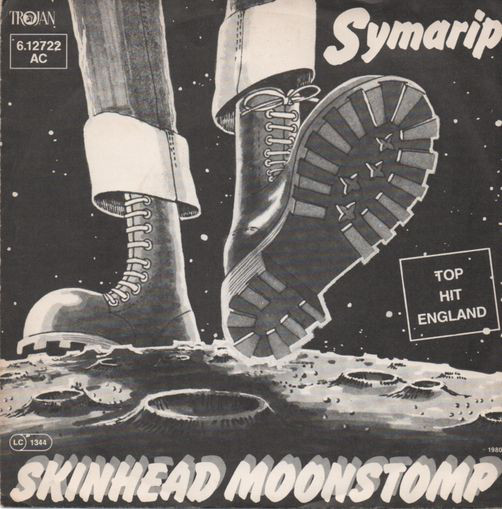
There’s even a whole genre of reggae called skinhead reggae that catered to skinheads. There were thousands of them, to the point where #1 hits on the radio were ska music. There was even a Jamaican ska song that broke the top 10 in the Billboard charts in the US in 1969, I think it was “The Israelites” by Desmond Dekker. It was so big in England, all these kids were buying Jamaican ska music. Jamaican artists started making music specifically for skinheads, so you had albums like Skinhead Moonstomp, which was all Jamaican ska music made by Jamaicans, singing about skinhead stuff for the skinheads.
ZB: How did you come up with the name and the logo for SHARP and what did it mean to you?
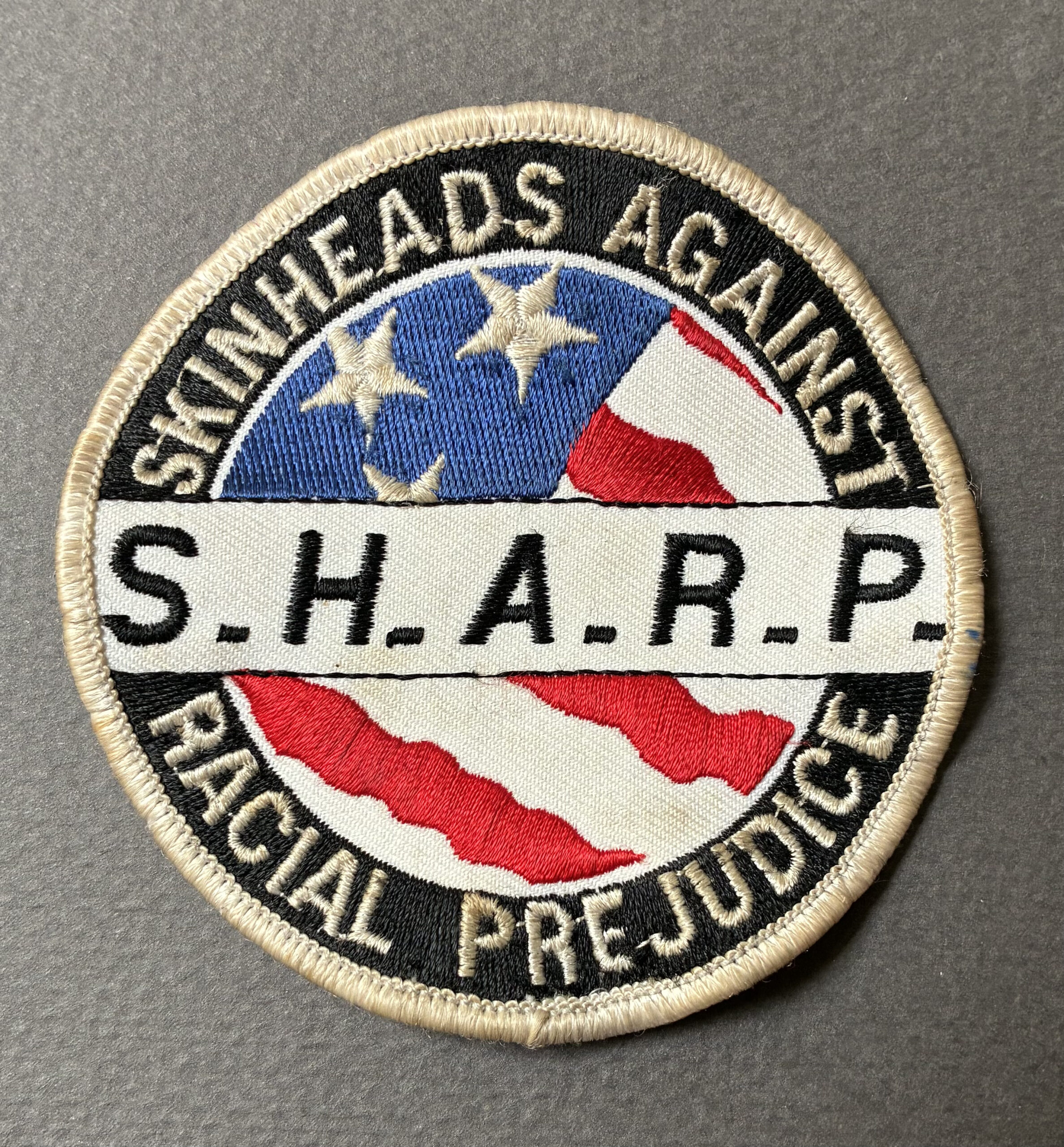
Marcus: When I came up with the anagram for SHARP, it was very specific that there’s no isms in there. It was focused on racial prejudice rather than saying anti-fascism or anti-this kind of ism or that kind of ism. I wanted to keep politics out of it, even though race is now very political or could be considered very political. For me, it was more about the social aspect of it. I was very particular about that.
The funny thing is the term “sharp” was something my friends and I would throw around to each other like “Oh you look pretty sharp there, kid” or “Hey, you’re looking pretty sharp today.” We were all super fastidious with the minutiae of how we dressed and everything, so that term was already kind of out there. One day I was just sitting at the dining room table and it struck me, Skinheads Against Racial Prejudice, that sounds pretty good, that’ll work.
Then I made the first logo for it, and I purposely included an American flag in the logo because I was also trying to pull kids away from the trend of being a neo-Nazi. I figured a flag isn’t inherently nationalistic, but it could appeal to some of their nationalistic tendencies and then pull them away from real nationalism.
Eventually, the logo got changed by Roddy Moreno, who was the singer from an Oi! band in Cardiff, Wales called The Oppressed and had a record label that had two divisions in it, one was Ska Records and the other was Oi! Records. He put out this series of Skins ’n’ Punks records, where he would have a punk band on one side and a skinhead band on the other. He is very anti-fascist. He was in New York signing my friends’ Oi! band called The Press. I think at that point, they were probably the only actual New York City Oi! band. They were a communist skinhead band. There was also a skinhead band in Britain called the Redskins, that were a socialist soul band. They didn’t play Oi!, they played a soul rock ’n’ roll combo. A skinhead can be into any kind of politics; it’s not part of the skinhead style.
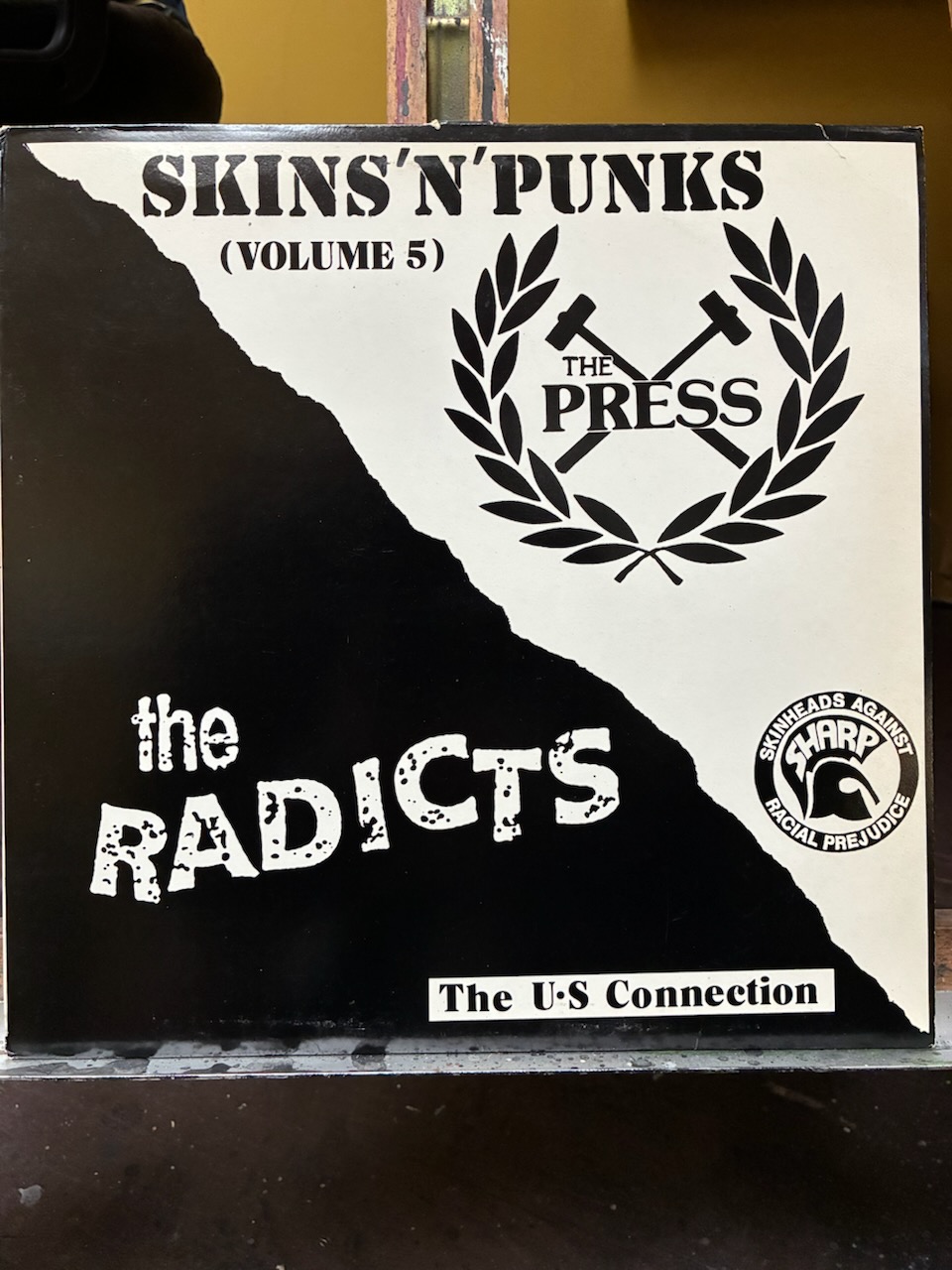
The Press was one side of the record and then this punk band I was friends with, The Radicts, was on the other side. It was a Skins ’n’ Punks Vol. 5. They were already involved in the whole SHARP thing. He (Roddy) thought it was a great idea and he wanted to bring it to Britain. So, he obviously wasn’t going to use the American flag. He changed it to the Trojan helmet, which is a nod to the Trojan Records label from the late ’60s, early ’70s, that focused on skinhead ska music for mostly skinheads. Skinheads would use that Trojan helmet logo on patches or buttons on their jackets. It was a way to identify them as more of a traditional skinhead. They added that to the logo and started putting it on all the records, so when the record came out with those two bands, the SHRP logo was on there.
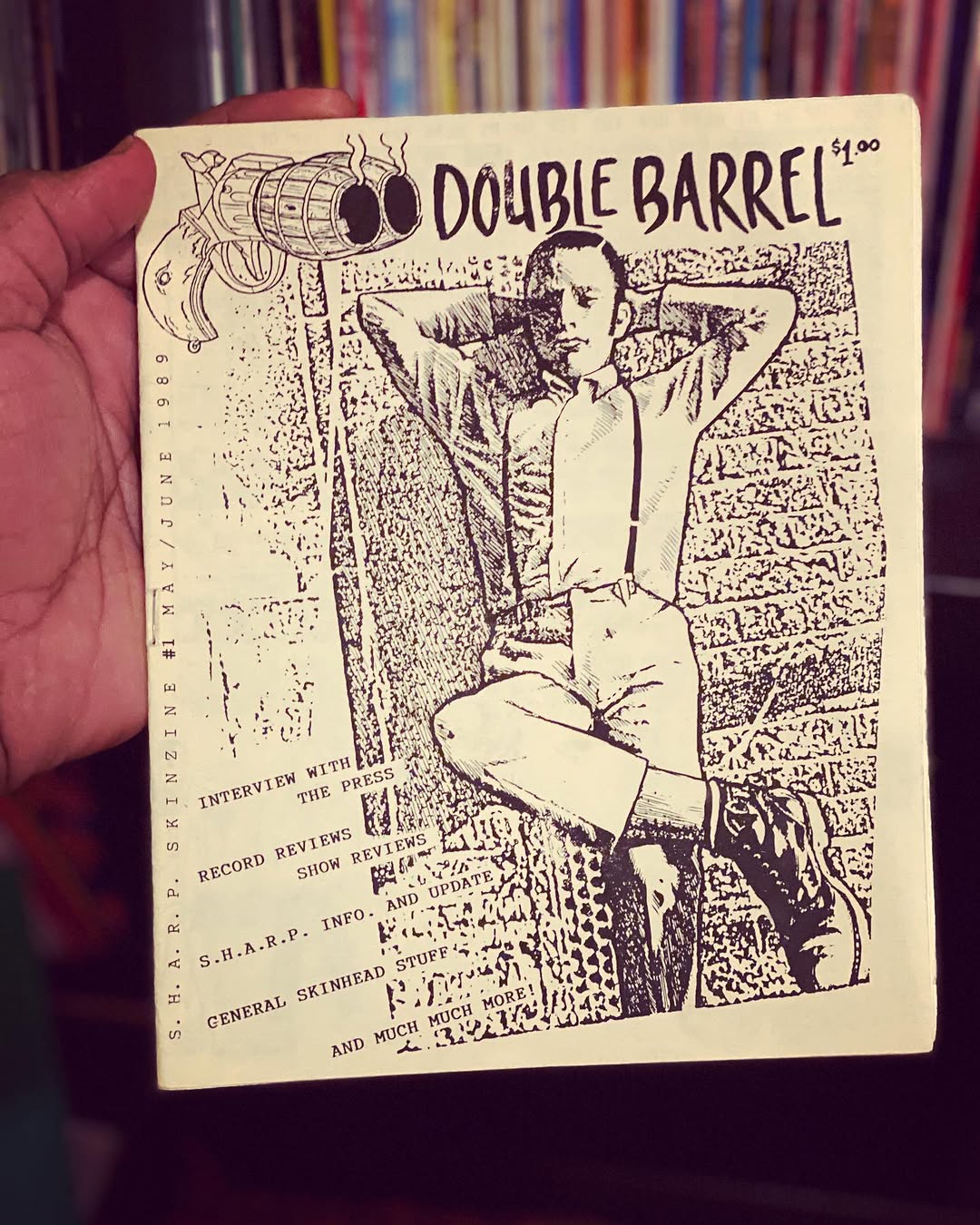
He started promoting it through his band and his label and then it became more of an international thing. That’s when we started getting mail from all over the world at our P.O. Box. We put out our own fanzine, a SHARP fanzine called Double Barrel because it was the title of an old ska song by Dave and Ansel Collins. At that point I had already done or worked on a bunch of different fanzines.
Our initial motivation for doing the SHARP thing was first to clarify and identify ourselves as having nothing to do with racism. Second was to try to alter the trajectory because it was becoming almost a trend in this country to be a little fascistic. Then on top of that you had people telling children who were fascist-thinking, oh there’s this gang you can become a part of, they’re all tough and hard and scare everybody. It just made the situation way worse.
It happened in England too. The whole thing that introduced the idea of fascism to the skinhead subculture happened in the late ’70s, maybe in ’80 or ’81. In the UK, I don’t know how far it extended, maybe to Ireland, even parts of Europe. In England, there was the National Front, a political right-wing group. They were gaining a lot of power in politics in Britain at the time. Part of what they did was outreach to mainly what they saw as troubled youth who they could manipulate into being foot soldiers for them. They saw the skinhead subculture as a place where they could do that. A lot of the kids in the subculture at that time were from England and from working-class families, so they were very pro-England. They’d go to football matches and do pro-England chanting. They could see they could get a foothold with them if they pushed nationalism and appealed to their Britishness. It worked on some of them.
Then the media started picking up on it and would see a skinhead kid and maybe be like, hey let me take some pictures of you and maybe you could do a Sieg Heil for us? And just to piss the people off they would Sieg Heil them ironically. We’re talking about kids and they probably don’t even know what that gesture means but they know it makes people mad. Especially coming from a country that had been bombed by Germany in World War II, so this kid’s grandparents would be terribly offended by them doing something like that. It was a way to piss people off. You gotta be careful with irony. Something that starts off as either an offhanded gesture or an attempt at being ironic or just to literally piss people off without anything behind it evolves further. People who don’t get that irony or humor are the ones who are gonna take it seriously.
ZB: How would you define traditional skinheads?
Marcus: When the skinhead thing happened, it was just the same as the mods but it was younger kids. If you were young and your older brother or sister was a mod, you weren’t going to be a mod because that just wasn’t cool to you anymore, so you became a skinhead. But it was just an evolutionary thing. Everybody wore the clothes and listened to the music. There were thousands and thousands of skinheads in 1969.
When we were trying to do the SHARP thing we would call ourselves traditional skinheads, even though by today’s standards we weren’t strictly traditional enough because we did have some ’80s flavor in our style. Like if you want to get down to the size of the check on our Ben Shermans or the fact that I had a pair of splattered bleached-out jeans, that was a very ’80s thing. So even though I would have called myself a traditional skinhead, I also went to hardcore shows and still listened to punk rock even though I was fully into the ska revival. We were into the second ska revival at that point in the late ’80s. There were a lot of good bands making music when we were doing SHARP that were playing the old-style Jamaican ska kind of stuff, even the 3rd wave ska band The Scofflaws that were all instrumental. So, we could indulge our own traditional aesthetic in our ska scene. We put out a ska fanzine and went to the soul party once a month that this soul club, the Empire State Soul Club, would put on.
Traditional skinheads don’t shave their heads bald; they just crop it short. The shaved heads was an ’80s thing. Traditional skinheads wore 8-hole Doc Martens, maybe 10-hole. The 14-hole Doc Martens are an ’80s thing. They were more like when the ’80s revival happened. The 14-hole Doc Marten is just too much. I would easily rock a pair of 8-hole Doc Martens any day of the week. Not anymore though because they’re made like shit but you know when I bought Doc Martens back in the day, I used to order them from England. In the ’80s they were made well.
ZB: There was really only one place here in San Francisco during the ’80s that sold Doc Martens, so when they sold out, you had to wait forever for them to get more or for special requests of certain colors.
Marcus: When I first got Doc Martens, my friend Eddie, the older friend who brought me into the fold, he was the one who had the connections. There was this band in New York called Urban Blight and they were like an early ska band around 1979 or 1980 and all the guys in the band wore that kind of stuff like Doc Martens and Fred Perrys and Ben Shermans. One of the guys in the band and his mother, they were expats, moved from England. She would go back to England and do business trips and frequent this old man’s clothing store. Back then all this stuff was considered like men’s work clothes. She’d go in there with a laundry list of boots and cards of laces and walk out with a bunch of goods.
Because of her, we could call them up and say, the lady sent us, and we would order 15 or 20 pairs of boots from them at a time. When they gave us the total, we would get a British sterling international money order and mail it to them. They would ship it to us, so it took a few weeks, and when we got them it was like Christmas. Back then if you saw somebody wearing a pair of Doc Martens, you would literally stop and talk to them because you’d think oh they know something, they know what’s up. It was just a rare thing to see.
You wouldn’t see it when I started going to hardcore shows. Most of the people still wore combat boots. It wasn’t quite as common, but it was a big part of the skinhead subculture. It was like you might wear a pair of Doc Martens or you might wear some Samba Classics, those indoor soccer shoes. It was very strict. We had friends in our group, especially these couple of girls, who would make fun of us and be like “75, 25” because we would always be wearing clothing that was 75% polyester, 25% cotton, like a pair of Levi Sta-Prest and a Ben Sherman. That’s what you wear, like mostly polyester. If the weather was hot, we’re dying, we’re sweaty and they’re laughing, going 75, 25.
I got kind of burnt out on that. In the end I was a skinhead for about four years. I was like man, the reason I started down this path was because I was trying not to be a conformist and this isn’t really being non-conformist if I’ve chosen a style that you have to literally conform to 110%. I mean when I got into punk rock, I thought I was being an individualist. I was 15 years old and I had dyed black spiked hair and a black leather jacket and Levi’s, so I looked like a Sid Vicious clone in hindsight.
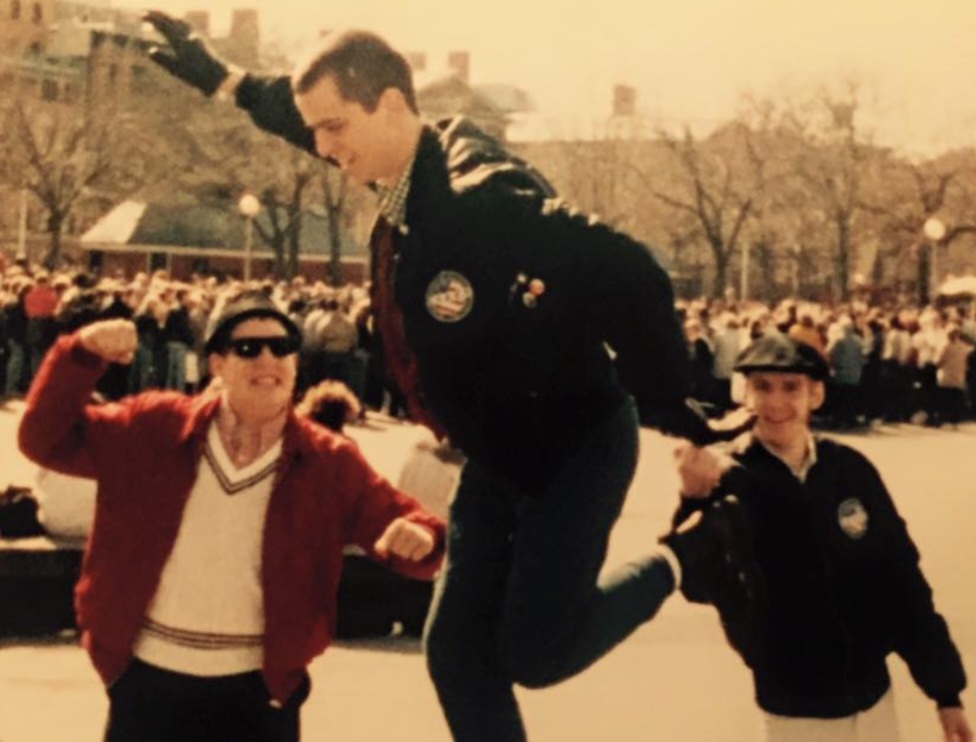
ZB: Clothing style in alternative subcultures used to mean something back in the day. It used to mean you were a part of something, that you stood for something.
Marcus: It was like a code. It was like a language for sure. We don’t live in a world that’s like that anymore. It was like that not just with us skinheads. Just having short, cropped hair was a weird thing in the normal world or whatever the status quo was. Now it’s just a different thing, those styles are just flavors that people can choose from. It’s not the same kind of visual language anymore.
When I got into punk rock in high school, I started sneaking off into New York City because I lived in New Jersey at the time. I wasn’t really allowed to be a 15-year-old kid going off into New York City by myself. I figured out a way to sneak off and do that on the weekends and eventually worked out a deal with my grandmother where I could go away for the whole weekend, no questions asked. I would just leave my high school right after the final class on Friday, get on the bus and go to New York and then come back Monday morning for my first class. I would spend the whole weekend in New York City visiting friends or whatever and mostly going to shows. I’d go to a show on a Friday night, I’d go to a show on a Saturday night and then Sunday matinee at CBGBs and then usually a Sunday night show too.
Then I really got into the hardcore scene because that was newer. Punk rock had its time and then hardcore came from it in the early ’80s. It was just the next sort of iteration to the earlier days of punk and that’s why you had a lot of the stripped-down look, which I really liked about the hardcore punk scene. It wasn’t as much colored hair and a leather jacket. I mean when I got into it, if you look back at some of the hardcore shows from the mid to late ’80s, especially the people on stage, they just look normal. They’re not outrageously dressed or very flamboyant in their looks. They just cut their hair short and started wearing T-shirts and jeans basically. It was less of a uniform and I appreciated that.
When I started going to hardcore shows in New York, it was really diverse, there were a lot of kids from all kinds of backgrounds and there were a lot of girls. I say girls not women because we were children. I can never stress this enough; we were all teenagers at the time. If somebody was at a show in their early 20s, we looked at them like they were too old for it. We were suspicious of people in their 20s.
ZB: It seemed like by the late ’80s, the hardcore scene became hyper masculine, full of angry jock-ish types, especially with the bands.
Marcus: When the hardcore scene started changing and it became a little more jock-y, that’s when I started losing some interest in it because I didn’t like the whole jock thing. We were against the jocks when I was in high school, so when that kind of vibe started, it was a little too sporty for my taste and it alienated a lot of people from the scene. It was all about being tough and hard and there’s only so many songs I can hear about how tough and hard you are. And it was also alienating to a lot of the girls in the scene because they didn’t exactly relate to this kind of messaging.
The thing about the skinhead scene at the time was a lot of girls were in it. It wasn’t exclusive.
ZB: In the 80s, men fetishized punk girls especially the skins because of the provocative, non-conforming way we dressed. We had sexual predators coming onto us all the time. Girls had it extra hard being alternative back then.
Marcus: I’ll be honest with you, some of the toughest people from the hardcore scene were chicks that I was scared of. You know there’s people where you’re like, I’m not fucking with that chick, she’ll kick my ass. Some of the toughest skinheads I ever knew were female.
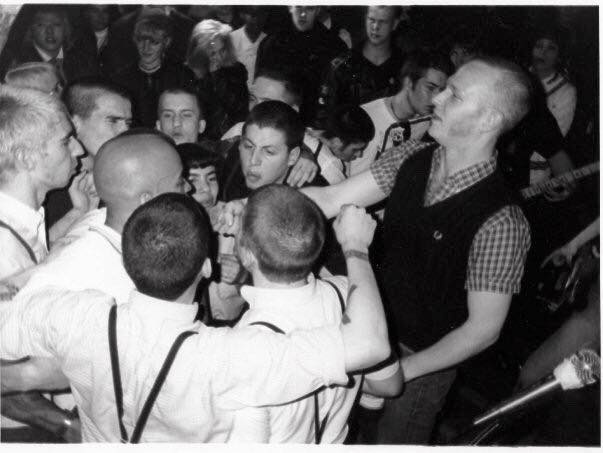
New York City back then was a very violent place. So, it’s not that unusual to think that there was violence in the hardcore scene or the punk scene or the skinhead scene because you could just be a normal person walking in the streets of New York and there’d be violence. In fact, I would argue that being in a hardcore show, we felt safer than being outside on the street right in front of the show. Even though we were doing our slam dancing, it was very controlled. One of the things I loved about the early days of going to hardcore shows was the whole camaraderie of it, where if you’re on the dance floor and you fall down, people pick you up and nobody’s going to try to hurt you. And if anybody’s literally trying to physically hurt you on purpose, they’re just gonna get kicked out of the club.
That changed over time. There was a lot of infighting. It’s one of the reasons I burned out on that scene too; it just started getting to a point where it wasn’t fun anymore going to shows because you’d have to worry about people causing trouble or starting fights all the time.
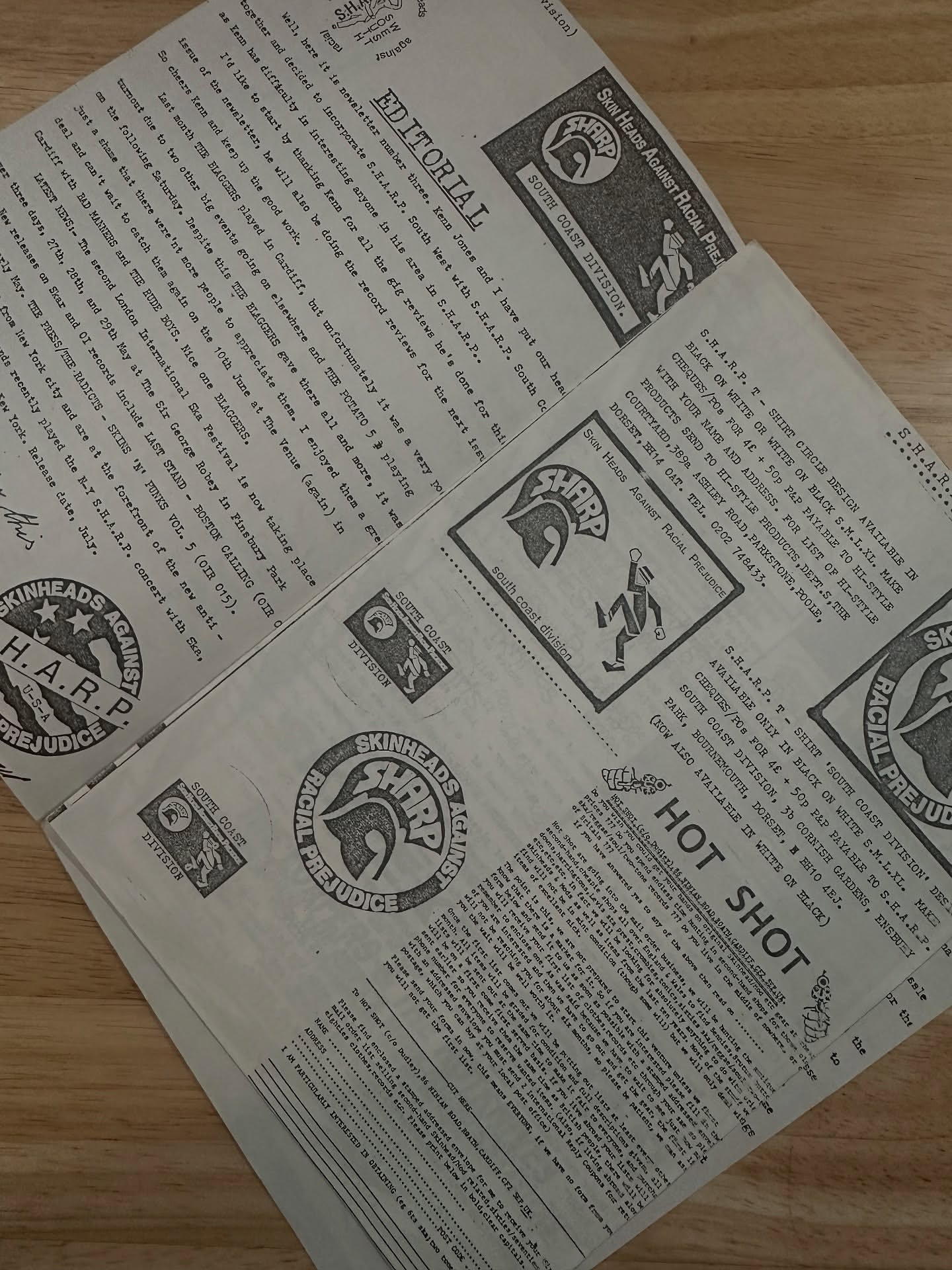
ZB: How did people in the skinhead scene back then in the ’80s organize for meetings or gatherings, especially on a national level? I don’t think this younger generation realizes how difficult it was to communicate with other peer groups back before the internet.
Marcus: It’s funny you should mention that because I’m convinced that if we had had the internet back in the ’80s there would have never been such a thing as Nazi skinheads because they would have Googled “Skinhead” or “What is a skin?” and they would have found out oh, this is some Jamaican shit. I’m a racist, I don’t wanna be into this Jamaican shit and they would have moved on to something else. But because it was all word of mouth, especially stuff coming from England, you would find out about the skinhead thing either by a fanzine or some other kids that you met physically in the real world. So, when the skinhead thing came over here to America, it had some weird variations that came about literally just from the lack of communication.
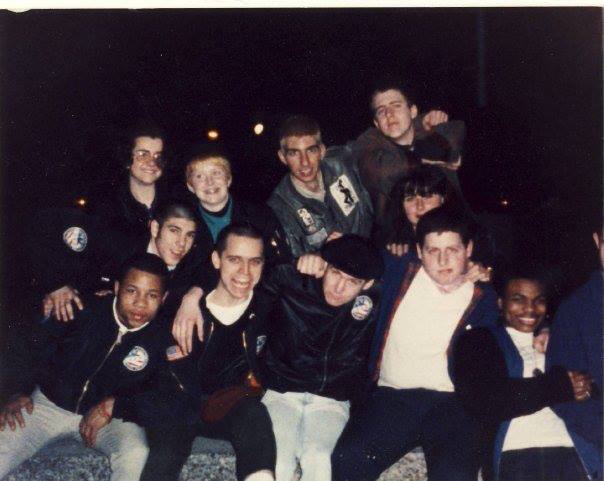
We had a multi-pronged approach to dealing with things because we weren’t really an organization. We put the SHARP idea out there and over the years I’ve heard “in this town they did it like this” and “this city they did it like that” and “this place was way more organized.” We weren’t an organization; we never called ourselves an organization. It was more like if you want to be a SHARP, just be a SHARP. Get a patch if you wanna get a patch, make a patch. It’s just there for you to identify yourself as a non-racist person who happens to be a skinhead, and you’ll teach people not to make assumptions about things like that because not all skinheads are Nazis.
In some towns, they had much more organization than others. We went out to this big event in Ohio once. I guess the people from Ohio contacted us at our P.O. Box or called me. They were trying to have this whole national conference where there were people from all different parts of the country. They were going to do a march or a rally and then some shows. So, we brought that band The Press out with us because they were part of the whole SHARP thing. We also dragged the guys in The Radicts with us because those guys would play out together a lot.
We got two vans and we drove out to Ohio. We had done a seminar talking about what we were doing in New York with a bunch of them and then I think we had a rally at some park. Then somebody tear-gassed the show. The next day we had a confrontation with neo-Nazis in the middle of the street and they tried to get us arrested but they failed because they’re idiots. We ended our trip to Ohio by being kicked out of the state. The police chief or whoever told me that we had five minutes to get over the state line. I’m a wiseass, so as soon as he told me that, I said oh cool so is there any place we can go eat lunch on the other side of the border that you could recommend? He just said, boy, you better get out of my face and looked at me like I went too far.
We were supposed to meet up at this lunch place with all the people that organized it to do our wrap-up and then leave. But the neo-Nazis confronted us in the street. They weren’t even skinhead types, though some of them were boneheads. So, they confront us in the middle of the street and this guy was swinging a studded belt yelling, “Come on Jew boy! Come on Jew boy!” I said why don’t you put the belt down you coward and called him a pussy. He was also trying to distract me while his friend was sneaking up behind me. At that point some couple said the cops were coming, you need to get out of here.
We got out of there, but when we pulled out, we saw one of the neo-Nazis watching from a storefront because he called the cops on us with a made-up story. The cops swarmed us. We were lucky that the cop who patted us down was an idiot. When we get in the van to leave, the Nazi guy who called the cops on us sees me get in the van, he comes out like what the fuck? I looked at him and was like, yeah sucker.
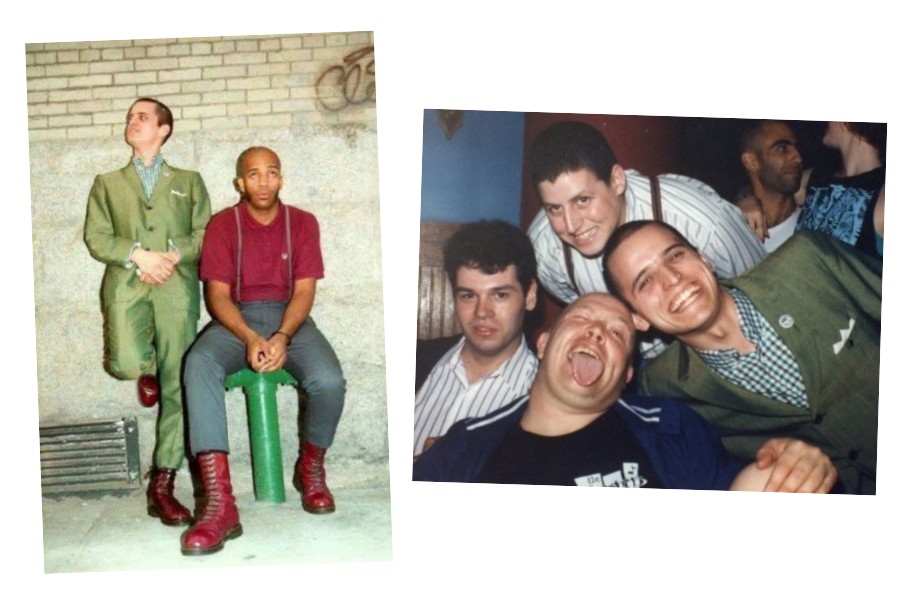
ZB: What music were you listening to as a skinhead?
Marcus: I got turned onto the 2-tone stuff, which was a record label from England. 2 Tone also became a term used for trying to spread the idea of unity between Black and white people. A lot of 2-tone bands were mixed with white English kids and English kids from Jamaica. That also coincided with the first rebirth of the skinhead subculture, which happened around ’79 or ’80. 2 Tone was bringing back the ska sound. Then that kind of music turned me on to the Jamaican influence from the ’60s. I started listening to soul a lot then.
I like pretty much all the 2-tone bands like The Specials, The Selecter. Also, Madness and Bad Manners. If we get into the Jamaican stuff, I love Desmond Dekker, Prince Buster, Toots and The Maytals, there’s a lot of great bands. I wasn’t so much into Oi! music, especially because there were a lot of Oi! bands that were questionable politically and some of them were just straight up white power. I was more into the ska side of things.
Prince Buster was a really big influence on music. He was a juggernaut, that guy. I love looking out for the connection, in any genre of music, where they have influences from Jamaica. I cannot get over how influential this tiny little island has been for decades on almost every music scene. I’m just fascinated by it. I love that time period. The music that came out of Jamaica from 1965 to about 1972 is some of my favorite music that has ever been created. The reason I got into that music was because of the whole skinhead subculture.
ZB: Remember how in the ’80s the police were worried about fictional punk or skinhead gangs and there was a “gang task force”? There were so many hilarious TV shows and movies back then about the dangers of these supposed punk gangs.
Marcus: That was more of a California thing. We didn’t really have those kinds of gangs in New York. If you got caught with a gun in New York City it was an automatic one year in jail, so nobody carried guns, it was very rare. There wasn’t a punk or skinhead gang problem in New York. We didn’t even use that term; we had a crew. That’s what we would use, it was either a group of friends or your crew.
There were some quasi (Nazi) skinhead gangs. They weren’t really a gang, they were just a bunch of idiots. The most organizing they would do is put out a hit list. Me and two of my good friends were the top three occupants of hit lists that this quasi gang put out. We challenged these guys to meet in this parking lot outside of a show in New Jersey to have it out with them. We were like, alright, you guys are really keen on calling so-and-so’s girlfriend and threatening her on the phone, why don’t you guys meet us after this show and we can all hash it out? Then of course they never show up because they’re a bunch of cowards. A lot of those guys are tough when they’re in a big group and they see you by yourself but if there’s an equal amount of people then they shut up real good. They’re really cowardly on top of being stupid.
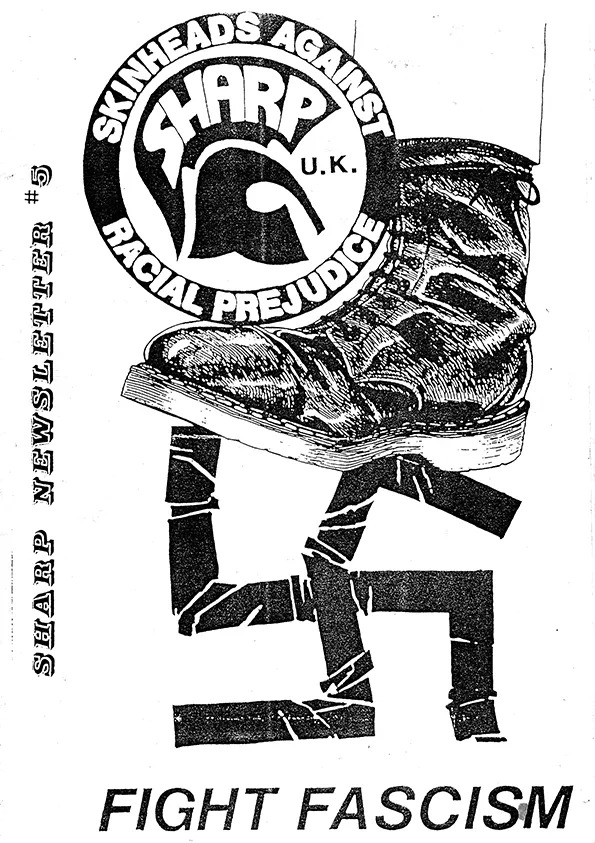
ZB: How did you end up being on the infamous neo-Nazi skinhead Geraldo show?
Marcus: They called my house and asked if I wanted to be on the show the next day. I think I’d already been on one or two smaller shows. Once I started doing the SHARP thing, I was getting contacted by all these random TV shows. At the Geraldo show, when we were all in the green room with my friends, I remember saying do not let them bait you into a fight on camera. You’re not doing yourself any favors by doing that, you’re just going to fall into their trap. And that’s exactly what happened.
As soon as Roy Innis started to put his hands on Metzger’s kid, all the Nazis in that audience rushed up. About one third of that audience at the Geraldo show was all these Nazi guys. There were three sections of audience members and the whole left side from the audience view was a block of Nazis. They had to fly them in from California because you can’t find that many Nazis in New York City. It was a trend in California, especially Southern California. Most of these guys were from Orange County.
The Geraldo show opened up my eyes to the reality that you can’t trust mainstream media. I guess now it’s just called legacy media. You just can’t trust their intentions, but I was a teen when I went on the Geraldo show. They didn’t even let us talk until the end when they were rolling the credits and it was only because I talked to Geraldo and said “Dude you gotta let us talk, why did you bring us here if you’re not gonna let us say anything?” Geraldo was like OK I’ll let you talk when we come back from break and that’s when they were rolling the credits so we tried to fit in whatever we could.
Then they had to take all those guys to the airport to go back to California. The media really jumped on the whole “They’re all Nazis!” rhetoric and it actually made things a lot worse by doing that. Shows like Geraldo were being exploitative. I don’t think they were trying to expose anything; they just wanted to be salacious. In the end, what Geraldo and all those other shows did was actually make the whole Nazi scene bigger and drew more fascistic-type people into the skinhead subculture. Those guys might have called themselves skinheads, but they weren’t. To this day I won’t use that term when talking about them. I will forever call them boneheads. They don’t deserve the name because if you’re a Nazi or racist you can’t be called a skinhead.
ZB: Will you talk more about what it was like being on that Geraldo show? Especially when the brawl happened?
Marcus: I met up with my friend Troy to meet with the crew of the show at an address that wasn’t the actual studio because they had to sneak us in through this backdoor since they had tried to do a show about Nazis a week before. Either the JDO (Jewish Defense Organization) or the JDL (Jewish Defense League) found out about it and tracked down the van that was taking the Nazis from the airport. I guess they were attacked or stopped in the middle of the street during the day with Uzis. They basically pointed the guns at them and said go back to the airport and go home. So, all those guys flew back to California.
Reality shows were kind of a new thing, and I’m naively thinking, this is like a news program of some kind. I was like OK cool, we get to point out the errors in the reporting where they are trying to categorize us all in this one narrow way. I realized my delusion really quickly.
We’re in the green room with Troy and my friend Brendan who’s in this band called SFA. He wasn’t a skinhead, he was part of the hardcore scene. When SHARP started, we had a lot of support from the punk scene and the hardcore scene. They would help us with handing out flyers or make us T-shirts. We had a lot of positive support from all sides. In the green room there were a few other skinheads and guys I didn’t know, so I didn’t think I could trust them. There was one kid who my friend said might be a plant and so we wouldn’t talk to him. We were really careful that way.
I remember before we went out on set, saying there’s a good chance they will bait us into a fight, just to get a fight on camera. None of us started a fight. It was after Roy Innis, the activist, stood up to the white supremacist, Tom Metzger’s son. The [Nazis] were taunting the whole time, like during commercial breaks there were all these words being thrown around. Off camera, the whole time we’re exchanging gestures. They were showing us their fists punching their hands like we’re gonna get you and all kinds of slurs were thrown around. By the time Roy Innis had enough and he gets up to start almost choking the guy, it just boiled over. It’s exactly what they wanted.
We were supposed to have an equal say on stage but we were just in the front row, right, and sitting next to this couple that had gotten attacked by some Nazis in a train station. We were not being given the platform that we really wanted. During the commercial break, myself and Troy were just like what the fuck, we came here to say something. When the fight happened, if you really slow it down, those guys in that whole Nazi block were ready to brawl. By the time that happened it had just exploded. That whole side of the audience came spilling over onto the stage to brawl. The one guy who was holding the chair hit Geraldo in the face with it. Pandemonium is going on. My friend Troy, Brendan, and I are just standing up like what the fuck’s going on.
I’m looking at two guys fighting in front of me. I pull them apart just trying to calm it down. While I was doing that, Troy was trying to protect the couple who had their baby with them. He was literally standing above them trying to block whatever body masses are coming over from landing on them. I’m just trying to figure out who’s who at that point. I pull these two people apart and right when that happens one of the Nazis sucker punched me right through them. I was just like what the fuck. I picked up a chair to hit the guy on the head and suddenly, it disappeared. I turned around and behind me there’s a huge security guard. He grabbed it from my hands and lifted it away from me. I was just like oh OK, I guess we’re done.
I don’t want to give Geraldo any credit but he was brawling with somebody. When I looked over, he was throwing punches, like low blows to the torso of somebody. He’s an asshole but at least he was in there brawling away. Then everything calmed down because the security guards flooded the zone and everything just immediately stopped. Geraldo says to the camera, all dramatic and bloody because his nose was broken, we’ll come back after a commercial. I’m literally 10 feet away from him, so I’m watching him do the dramatics and I’m thinking, huh you weren’t exactly being a victim like two seconds ago, you were fighting someone. As soon as they cut the cameras off, he stopped his act and had the biggest grin from ear to ear and then that’s when it hit me. The light bulb went off in my head, oh I get it, I get it now. This wasn’t really about sorting out the truth at any level. This was literally about what just happened.
When they come back from commercial break, they let us get up and shoehorn some words in. That was the end of it. They get all those guys out and they put them in the van and take off. Some of our friends were waiting outside the studio on the sidewalk and while we’re talking there was a big dude who worked there, who walked right behind me and leaned over to my ear, saying “you didn’t hear this from me but those guys are going to be flying out of this airport, on this flight, at this time.” Then just kind of backed away and disappeared. A few of the people in our group were like yeah we’re gonna go to the airport and get those guys. I was like you think you’re going to go brawl at the airport? You’re just going to go to jail.
At some point, right after the show, a guy who represented the Jewish Defense Organization started talking to us. They’re part of a splinter group from I think the Jewish Defense League. They’re pretty militant. They were both at odds with each other, it was a weird situation. He decides to take me and Troy and a few others to this kosher deli to have a meeting. He’s trying to get us to work with them to infiltrate some kind of neo-Nazi militia camp somewhere in the Midwest or the South. I was just like, yeah, no thanks, bye. He was like we’ve got guns; we’ll train you how to use them. They were like a militant Zionist group. I’m all for fighting antisemitism but I’m not down for infiltrating some Nazi gang. I don’t want to hang out with those idiots and I am not going to pretend I’m a racist. I can’t even do it in jest, so it’s not going to happen.
We were all kids, we’re not talking about grown adults with fully formed thinking. Maybe this should have been something people recognized, like the Geraldo show. They should have been like, yeah these are big topics but hey we’re talking to a bunch of kids and handled it in a certain way. This is one of the things that maybe the media should learn. You gotta be careful when you think you’re representing something. If you cover it wrong, if you allow room for disinformation, it actually ends up promoting it more than stopping it. I don’t know if Geraldo was like if we expose this it will help cause an end to it. They take that stance but at the same time, the Geraldo show pulled more neo-Nazis into the skinhead subculture. A bunch of Nazi-minded idiots are going to be drawn into it because they’re like oh OK cool, I can shave my head and be an asshole.
ZB: It’s too bad there aren’t still concerts that educate kids like Rock Against Racism or Amnesty International’s Human Rights Now! tours. SHARP was both informative but also a form of activism. What are other ways you were involved in activism?
Marcus: In my personal life I was involved in political stuff. But I thought it was better if politics stayed out of the skinhead thing at its core. It’s not a politically driven subculture. I was too young to be involved in the Civil Rights Era but I remember every time I would see documentaries about it or reading about it in books, I’d be thinking I would have been out there fighting against racism too. I knew we were being active about it.
When I came up with the SHARP anagram, I used the words against racial prejudice rather than anti-fascist or anti this or that political affiliation. I kept it more on the social level. When I got into the subculture it was something that didn’t come with a political affiliation attached to it at all. If you had one, that was your thing. It wasn’t until the “Nazi skinheads” became a big thing connected with the media blowing it out of proportion, larger than it ever would have been if the media had never gotten involved in covering it.
I keep hammering, how can you be a racist if you’re in a subculture that was originally based on the love and admiration of culture and music that came from Jamaica? That’s the foundation of this subculture. You can’t be a skinhead if you’re a racist because it makes no sense.
ZB: You mentioned that as a skinhead, you tried first to confront the Nazi skins and reason with them, using psychology rather than violence. Will you talk more about that?
Marcus: Sometimes, for example, if I’d go into a record store and I saw some guy who looked like he might have the trappings of a neo-Nazi, I would start talking to him and see what their deal was. If they turned out to have some weird fascistic philosophies, I would say “You know you can’t be a skinhead and a Nazi, right?” and they couldn’t understand where I was coming from because they just didn’t know any better. I would try to educate them like you need to stop calling yourself a skinhead because X, Y, and Z. Rather than me following them out of the store and punching him in the head or something. I figured maybe they would stop calling themselves that.
A lot of times with certain people, especially kids, if you beat them up for something like that you’re only going to reinforce their stupid ideology. Sometimes you just have to humiliate them instead and that just makes them feel stupid about what they were doing. It might be a little more effective at changing their minds.
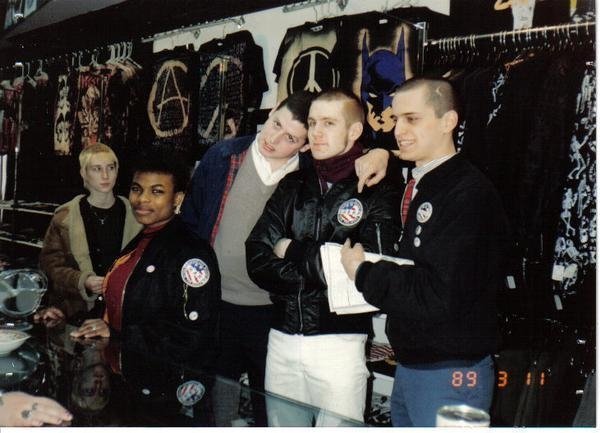
One time my friends and I were walking downtown, I think we were going to a record store next to this place called 99 X, one of the first places in New York City that sold skinhead gear imported from England. The record store next door was called Some Records because it sold some records and it catered specifically to the hardcore scene. It literally had like one little bin with like 10 or 15 records.
Out of 99 X came these two kids and as soon as they saw us, one kid drops his flight jacket down off his shoulders in an attempt to hide his patches. I just walked up to him and was like hey what do you got on your jacket? I pulled the sleeve up and it was like a Screwdriver button, some white power patch, and some other Nazi button. These guys are clearly intimidated because there’s a few of us, but we weren’t the kind of people that just jump someone. One of my pet peeves is when a bunch of people jump on one or two guys. We never did that kind of thing, at least not when I was around because I wouldn’t tolerate that kind of behavior.
I said, oh look at this white power button, and I pulled it off this jacket and threw it into the gutter and the Screwdriver patch, I ripped it off and threw it into the gutter. I was like so you guys are into this kind of shit, huh? I was like you know if you guys are gonna start believing in this kind of crap you better really mean it. I don’t think you really mean this. I don’t think you really believe in this shit because if you did, you wouldn’t let me do this right now. If I believed in what you believe in and somebody started ripping off my patch, I would fight them. I wouldn’t stand there and let him do it, so it’s clear to me that you don’t really believe in this shit. If you’re trying to fly this flag, you’re gonna get shit for it all the time, especially when we’re around.
My two friends started chasing these kids down the street and kicked them in the ass, chasing them away, slapping them on the back of the head. In my mind, those two kids ran away, got humiliated in a place where they wanted to be cool, went back home and hopefully rethought what they were doing. And realized, “Yeah I don’t really believe this shit and I don’t wanna have to fight for it.” Knocking them around and beating them up to the point they’re just gonna go home broken and bruised, they might be like I’m gonna be a bigger Nazi now because some people double down.
But I wouldn’t say that I was a pacifist. I wouldn’t say that I didn’t enjoy the occasional righteous fight once in a while. But we weren’t troublemakers; we didn’t go around trying to start fights. We dealt with real violence on the streets, not like kids fighting against each other but real scary street violence shit. This weird chicken fighting amongst kids was just not interesting to us.
ZB: The rise of white supremacy in the ’80s was so bad here in SF, neo-Nazi groups would go to Haight Street specifically to recruit. They’d go after young kids who were troubled youth, runaways, and the vulnerable. Until they ran out of town in ’89 or ’90.
Marcus: It’s predatory behavior, kids are easy to manipulate. It’s the same reason why any kid gets involved in a group like a punk rock subculture or a skinhead subculture. I know from my experience, I had really low self-esteem when I was a kid, just like a lot of other kids. When I got into the punk thing, that was the first time I would stand up to bullying. Before that I would just keep to myself.
After I became a punk, as soon as a jock asshole said anything to me, I would literally go up to their face and be like “fuck you, you got a fucking problem?” and they would back down. They would cower down. That’s when I learned bullies are pretty much cowards inside. It’s the same story as how the National Front did it in the late ’70s in England. They see these kids that are angry and pliable, so they think they can manipulate them. There was a lot of recruiting around punk and hardcore shows. We had these grown men from the Klan in the parking lot trying to indoctrinate us.
ZB: I was thinking part of why neo-Nazis seemed less active after the ’80s was because Tom Metzger was sued after a Black man in Portland was murdered by some Nazi skins. The family went to court and sued the White Aryan Resistance for being responsible and won like 12 million and basically bankrupted him.
Marcus: A funny side story about Metzger and his white supremacy group, somebody had done an exposé article on Metzger, I think it was Rolling Stone, and they had a photo in the article of his TV repair shop sign in the background with their phone number on it. Back in the ’80s, there were these numbers that you could use to get free phone calls until it got canceled. You’d be able to use it for days and anytime we got one of those, I would go to the nearest public phone and prank his store. We were just constantly calling Metzger’s store number. The music they were playing was like “Ride of the Valkyries,” one of these Nazi-adjacent songs. I had this one friend who was into Norse mythology. I put him on the phone with them and he was like (in a deep voice) “Thor is gonna get you and send you to Valhalla!” We’d stand around the phone laughing.
ZB: Are there any books or films that really embody the skinhead subculture?
Marcus: I still have my copy of Skinhead. It was kind of like the skinhead Bible. It laid out the history of it. Don Letts made a really good documentary on the skinhead subculture called The Story of Skinheads. There’s a great fictional movie called This Is England by Shane Meadows. It really captures the experience. All the different characters in it, those could be my group of friends. They made it into a TV series afterward because the movie was so popular.

ZB: How much was the straight edge subculture associated with the skinhead movement?
Marcus: Not so much. I was straight edge, but I was before I became a skinhead. It was because I was in the hardcore and punk scene. It was part of the hardcore scene but there was a lot of crossover, a lot of skinheads were into hardcore punk. Some of my friends who were skinheads were really into drinking. There’s that part of the culture, where they like to go out and drink beers and sing songs. For me, it was a personal choice. I wasn’t the kind of person that would try to push it on other people.
I got into it because of Minor Threat. They started the whole thing, but it wasn’t about a dogma for people to follow. Some got really militant, where you hear stories about people drinking and they’d knock a beer out of your hand. So as a young kid with peer pressure, when you could say I don’t do that because I’m straight edge and people don’t ask you a second time, then you realize OK this works for me.
ZB: What else is something you’d like people to know about skinhead culture?
Marcus: Good lessons can be learned about how this kind of subject matter gets handled by the press, so we don’t repeat the same mistakes made in the ’80s and we don’t create a whole group of neo-Nazis that wouldn’t have existed were the story and news more accurate about it, instead of sensationalizing it to the point they create a larger version of it. Our specific way to deal with it was to kneecap it from the inside out. We were more of an educational thing. We’d rather do a tactic that leads them away from the ideology. It has to be done carefully. Sometimes just equating racism with a lack of intelligence. It’s always been an uphill battle fighting the bad propaganda that happened in the ’80s.
Also, I think people need to learn if you thought your whole life that skinheads are all Nazis, now you know you were lied to. Maybe apply that to everything else you hear. How many other times have you been convinced of a lie? Maybe other things you believe in aren’t true.