Shoegaze
Shoegaze, originally called shoegazing, is an alternative rock style that originated in the late 1980s around heavily processed guitars, feedback, obscured vocals, and the interaction between noise and melody. My Bloody Valentine, Slowdive, Ride, Lush, and Chapterhouse are among its defining bands. The sound developed through dream pop, noise pop, post-punk, and psychedelia, later overlapping with emo, electronic music, and metal through styles such as blackgaze and doomgaze.
What is Shoegaze?
Shoegaze places guitar texture and atmosphere at the center of a song. Distortion, reverb, delay, and other effects can blur the boundaries between instruments, while vocals often sit within the overall sound rather than clearly above it. Songs may be gentle and melodic, intensely abrasive, or both at once.
Originally, the term described a loose circle of bands associated with the independent music scene in Britain and Ireland around the turn of the 1990s. Since then, it has become a broader musical category encompassing bands with different backgrounds, recording methods, and relationships to the original scene.
Shoegaze is not defined by one tempo, guitar pedal, or mood. Ride’s propulsive rhythms, Slowdive’s spacious arrangements, and My Bloody Valentine’s bending guitar sounds exemplify the genre’s diversity. Heavy distortion does not necessarily make a band shoegaze, and the genre is not limited to slow or melancholy songs.
What Does Shoegaze Sound Like?
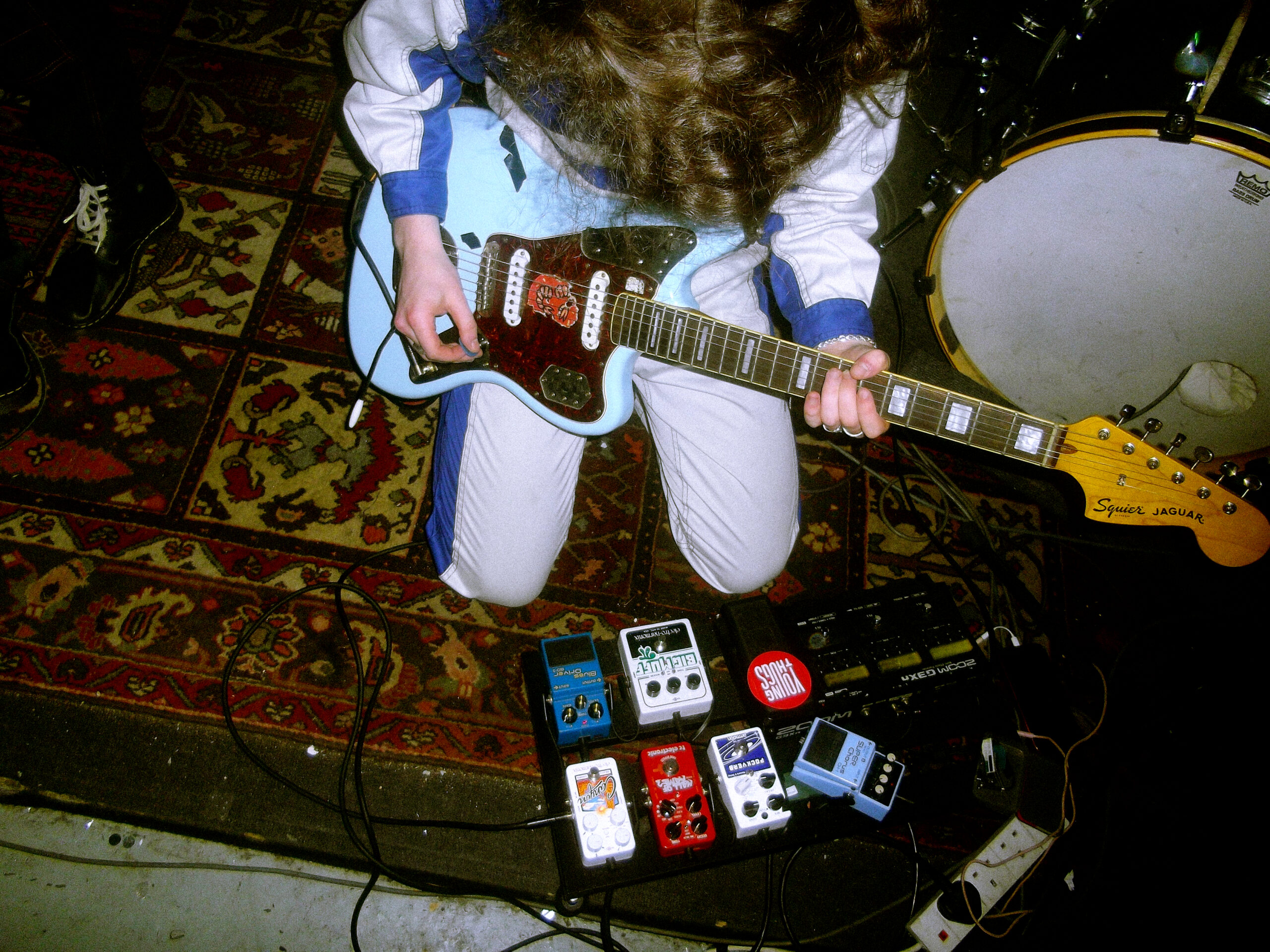
- Distortion, fuzz, feedback, and sustained guitar sounds create dense layers around the song.
- Reverb, delay, chorus, and other effects can soften the attack of notes or make separate parts seem to merge.
- Vocals are often understated, doubled, or partially buried in the mix, with the voice functioning as another texture.
- Melodic songwriting remains important, even when the words and individual instruments are difficult to distinguish.
- Rhythms range from driving rock beats to slower, more suspended arrangements; dance influences also appear in parts of the genre.
- Noise and melody can coexist throughout a song rather than being separated into quiet verses and loud choruses.
My Bloody Valentine guitarist Kevin Shields’ “glide guitar” technique became particularly influential. By manipulating the vibrato arm while strumming, he made chords bend and waver in pitch. Combined with his approach to amplification, effects, and recording, this helped produce the unstable guitar sound associated with the band.
The recording process matters as much as the equipment: how a guitar part is played, recorded, and placed against another can change the whole character of a song. Andrew Perer’s Turn My Head Into Sound: A History of Kevin Shields and My Bloody Valentine follows Shields’ work both within the band and as a producer, remixer, and soundtrack contributor, placing his guitar playing within that wider creative practice.
Other groups arrived at different results. Some favored clearer guitar lines and vocal harmonies; others moved toward drone, ambient music, or electronic production. Shoegaze describes this broader approach to sound rather than a checklist of equipment.
Why Is It Called Shoegaze?
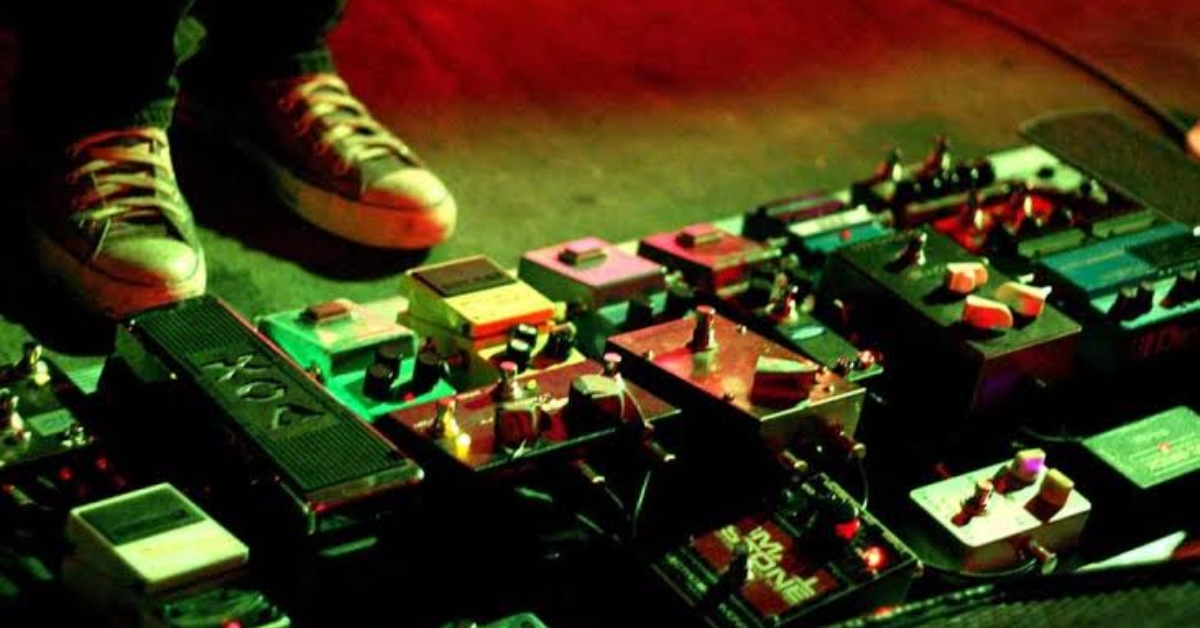
“Shoegaze” comes from “shoegazing,” literally looking down at your shoes. The British music press used it mockingly in the early ’90s to describe bands whose musicians stood relatively still and looked toward the floor while playing. For guitarists, this often meant watching the effects pedals used to shape their sound.
The term is commonly credited to music executive and occasional journalist Andy Ross after seeing Moose perform in 1991. According to recollections from the scene, singer Russell Yates was looking down to read lyrics placed on the floor. Accounts differ about exactly how the word entered circulation, so the often-repeated story that it first appeared in a published Moose review is disputed. Ryan Pinkard’s oral history Shoegaze examines these conflicting recollections.
What began as a dismissive comment about stage presence eventually became an accepted name for the music. Its meaning shifted from how musicians appeared onstage to the layered guitars, obscured vocals, and interplay of noise and melody associated with their records.
A related nickname, “The Scene That Celebrates Itself,” described the overlapping circle of musicians who attended one another’s shows and socialized together. Neither label was a manifesto adopted by the bands, and several musicians objected to being grouped under them.
Where Did Shoegaze Come From?
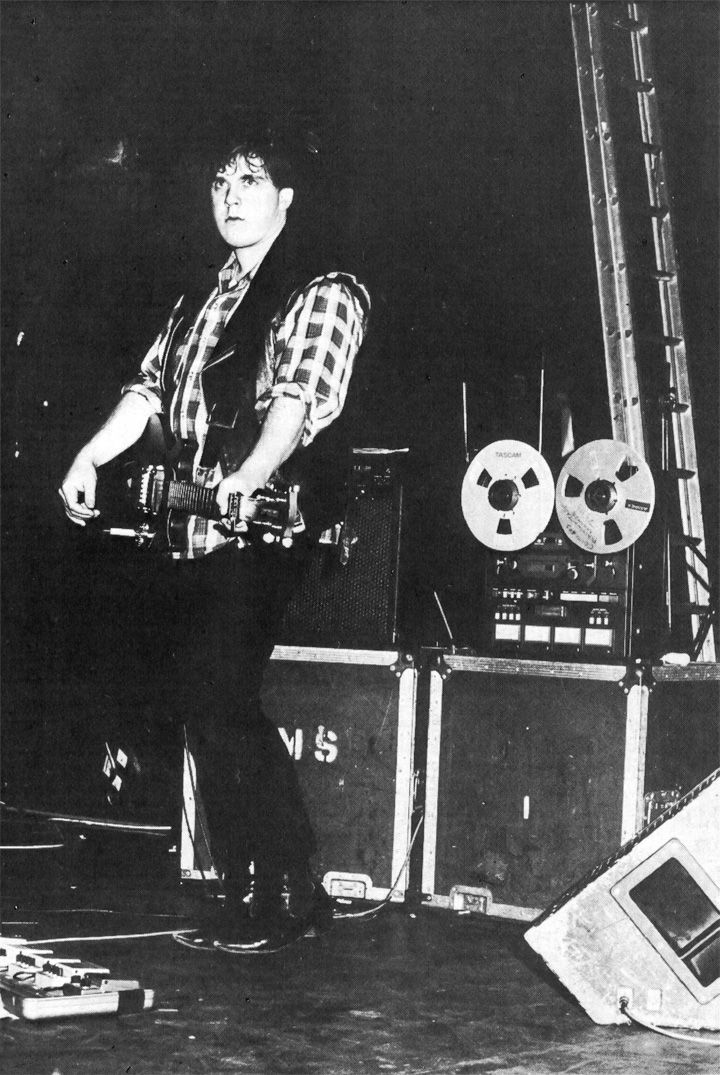
Cocteau Twins and The Jesus and Mary Chain were two of the most foundational bands. Robin Guthrie’s atmospheric guitars and Elizabeth Fraser’s distinctive vocals helped establish the dreamier side, while The Jesus and Mary Chain’s Psychocandy (1985) combined direct pop melodies with abrasive feedback. Spacemen 3 and Loop contributed droning repetition and psychedelia. Sonic Youth, Dinosaur Jr., and Hüsker Dü provided further examples of how noise and melodic songwriting could work together.
A.R. Kane were another important precursor. The London duo brought together guitar noise, dub, psychedelia, and experimental pop, using “dream pop” to describe their music. Their work helped connect approaches that later became associated with shoegaze and post-rock.
My Bloody Valentine formed in Dublin before eventually settling in London. Their You Made Me Realise EP and Isn’t Anything, both released in 1988, established much of the emerging genre’s guitar vocabulary. Loveless followed in 1991 and became its most widely recognized reference point.
Around the same period, Ride, Slowdive, Lush, Chapterhouse, Pale Saints, and Swervedriver developed distinct versions of the sound. London and the Thames Valley were important centers, while Creation and 4AD released many of the defining records. Firsthand recollections collected by XLR8R describe friendships, shared influences, and different musical ambitions within the scene.
Shoegaze also belonged to a wider period of experimentation in underground guitar music. Simon Reynolds’ Still in a Dream: Shoegaze, Slackers, and the Reinvention of Rock, 1984–1994 places it alongside noise pop, slacker rock, and grunge. That broader perspective helps explain the shared ground between British bands such as My Bloody Valentine and American groups such as Sonic Youth and Dinosaur Jr.: feedback, distortion, and unconventional guitar sounds could become part of the songwriting itself.
Shoegaze also developed beyond Britain and Ireland. Swirlies, Drop Nineteens, Medicine, and Lilys were part of its early American history. The Ecstasy of Saint Theresa in Czechoslovakia and Coaltar of the Deepers in Japan demonstrate that the sound was already traveling internationally during the early ’90s.
Shoegaze vs. Dream Pop
Dream pop is atmospheric pop or rock in which soft-edged production, melodic vocals, and a sense of space are central to the music. It can use clear, reverberating guitars, keyboards, synthesizers, or a combination of these. Cocteau Twins and Beach House are useful reference points.
Shoegaze generally places greater emphasis on guitar distortion, feedback, and sounds that merge into dense layers. The two styles share an interest in atmosphere and melody, and bands such as Slowdive and Lush are regularly described using both terms.
The distinction is easiest to hear in how the instruments are arranged. In much dream pop, the vocal melody, keyboard part, and guitar line remain individually recognizable. In shoegaze, those elements may become harder to separate, with the voice blending into the guitars and the distortion becoming part of the melody.
Beach House’s keyboard-led arrangements illustrate how dream pop can create a hazy atmosphere without a dense wall of distorted guitars. My Bloody Valentine’s Loveless shows how shoegaze can make noise and melodic detail almost inseparable. Slowdive’s Souvlaki sits between these approaches, combining spacious songs with passages of heavily layered guitar.
How Is Slowcore Related to Shoegaze?
Slowcore is a style of indie rock associated with restrained tempos, sparse arrangements, understated vocals, and an emphasis on repetition, silence, and small changes within a song. It developed around the late ’80s and early ’90s, with Codeine, Low, and Red House Painters becoming key reference points.
Slowcore and shoegaze can share subdued singing, sustained guitar sounds, melancholy moods, and an interest in atmosphere. Their arrangements often work differently, however. Slowcore frequently leaves instruments exposed: a few guitar notes, a clearly audible bassline, and widely spaced drum hits can carry a song. Shoegaze more often builds atmosphere by overlapping and blending sounds.
Slowcore can become loud or distorted, and shoegaze can be quiet or rhythmically energetic. Tempo and volume alone do not distinguish them. The more useful question is whether a song draws its effect mainly from space and restraint or from layered, processed sound.
Codeine’s sparse guitar, bass, and drums illustrate a different approach from My Bloody Valentine’s dense recordings. Bands can also move between these approaches: Slowdive’s Pygmalion explores stripped-back repetition and ambient space, while Duster and Planning for Burial occupy overlapping territory involving slowcore, atmospheric guitars, and home recording.
What Subgenres and Related Styles Overlap With Shoegaze?
Some of the following terms describe combinations of shoegaze with other genres. Others name a revival, a broad musical tendency, or a neighboring style. Their usefulness depends on whether they explain something audible in the music, rather than simply grouping every band with reverb under another label.
Noise Pop
Noise pop combines recognizable pop songwriting with distortion, feedback, and rough recording textures. Catchy vocal melodies, repeated hooks, and relatively direct song structures remain central, even when the guitars are harsh or abrasive.
The Jesus and Mary Chain’s Psychocandy is a clear example: straightforward melodies continue underneath piercing guitar feedback. Early My Bloody Valentine also occupy the overlap between noise pop and shoegaze.
The distinction concerns how the noise interacts with the song. Noise pop often places an abrasive surface over a clearly outlined tune; shoegaze more often blends the vocals, guitars, and effects into a less easily separated whole. A record can do both, so noise pop is a related tradition rather than a strict subdivision of shoegaze.
Blackgaze
Blackgaze combines elements of black metal with shoegaze. Its black metal side commonly supplies rapidly repeated guitar notes, known as tremolo picking, very fast drum patterns or blast beats, and harsh screamed vocals. Its shoegaze side contributes overlapping guitar layers, reverberation, and melodies that remain audible through the distortion.
The combination can work within a single passage: fast-picked guitars become a continuous melodic wash while screamed vocals sit deep in the mix. Other songs move between aggressive sections and quieter, spacious passages with clean guitars or singing. Neither structure is compulsory.
Deafheaven’s Sunbather (2013) is a widely recognized example of the contrast between black metal intensity and expansive melodic arrangements. Sadness, Unreqvited, and Asunojokei explore other balances of harsh vocals, atmosphere, and melody. Post-black metal is a broader category for music extending beyond conventional black metal; it can involve post-rock, progressive structures, or other influences without using shoegaze.
Alcest’s early recordings were influential in blackgaze’s development, but that history should not be separated from Neige’s participation in Peste Noire, a band associated with racist and far-right politics. Neige has subsequently disavowed racism and Nazism, as documented in reporting on his past involvement. Those statements do not erase the collaboration. Musical influence does not make those associations irrelevant.
Doomgaze
Doomgaze combines shoegaze’s layered distortion and partially submerged melodies with the slow movement and low-end weight associated with doom metal, drone, and post-metal. Guitars and bass often sustain for long stretches, while repeated riffs and deliberate drum patterns make changes feel gradual and heavy.
Compared with blackgaze, the emphasis is generally on sustained pressure rather than speed. A melody may emerge through a prolonged distorted chord, and soft or distant vocals can sit against a much heavier instrumental background. Some recordings use recognizable riffs; others let those riffs dissolve into drone.
Jesu, Nadja, and The Angelic Process illustrate different approaches. Jesu often retain clear melodic songs beneath their heavy repetition, Nadja lean further into extended drone and dense texture, and The Angelic Process combine overwhelming distortion with buried melodies. Planning for Burial also brings slowcore and intimate home recording into this territory.
Nu Gaze and the 2000s Shoegaze Revival
Nu gaze, also written nugaze or nu-gaze, originally described a new generation of shoegaze-influenced artists that emerged around the 2000s. In this usage, “nu” means “new”: these bands returned to the layered guitars and melodic haze of the original scene while combining them with contemporary alternative rock, indie pop, or electronic production.
My Vitriol’s Finelines (2001) is an important early reference point. Its forceful drumming, prominent rock riffs, and direct choruses give the music a more sharply defined structure, while sustained, overlapping guitars connect it to shoegaze. Asobi Seksu’s Citrus (2006) represents a brighter, pop-oriented approach, with prominent vocal melodies and keyboards surrounded by ringing guitars and bursts of noise.
These examples also explain why nu gaze does not have one distinctive beat, guitar tone, or vocal style. The term identifies a revival and a generation of musicians more reliably than a separate sound. A band described as nu gaze might closely resemble early shoegaze, make more direct alternative rock songs, or bring electronic elements into the same guitar-based approach.
The term later acquired another meaning: some listeners now use it for music combining shoegaze with nu metal or Deftones-influenced alternative metal. That newer usage should be distinguished from the original 2000s revival label.
Nu-Metal and Alternative-Metal Crossover
In its newer usage, nu gaze can describe music that combines soft, distant vocals and atmospheric guitar layers with low-tuned riffs, a pronounced bass presence, and the rhythmic weight associated with nu metal and alternative metal. Compared with much early shoegaze, the individual riffs and drum accents are more clearly defined, making the music feel more groove-driven.
Deftones are a major reference point for this crossover, particularly the contrast between Chino Moreno’s airy singing and the band’s heavy guitars. Narrow Head, Fleshwater, and parts of Loathe’s music illustrate different areas of this overlap, though none should be reduced to a single genre label.
Eli Enis’s explanation of shoegaze’s connection to nu metal also examines how online discovery has brought their audiences together. Shared listeners and similar moods can encourage the genres to be grouped together even when their musical histories differ. Deftones’ influence on newer shoegaze does not make every Deftones record shoegaze, just as the original nu-gaze label did not imply rapping or nu-metal rhythms.
Heavy Shoegaze
Heavy shoegaze is a broad description for shoegaze that emphasizes thick, often low-tuned guitar riffs, forceful drumming, and a substantial bass sound while retaining blurred vocals and layers of effects. The main riff is frequently easier to follow than in the more diffuse sound of My Bloody Valentine.
Nothing and Cloakroom are useful examples. Both combine melodic, understated singing with guitars that can feel physically heavy, drawing on a wider history of alternative rock. Hum, Failure, and Swervedriver are important reference points for this territory, although their music extends beyond shoegaze.
“Heavy” does not simply mean loud: early shoegaze could already be extremely loud. Here, it usually describes the weight and attack of the riffs and rhythm section. The term can overlap with grungegaze, doomgaze, and alternative-metal crossover without requiring the specific characteristics of any one of them.
Grungegaze
Grungegaze is an informal label for music combining shoegaze textures with grunge and ’90s alternative rock. It commonly features fuzzed-out chord riffs, strong verse-and-chorus structures, and a contrast between quieter passages and louder, more forceful choruses. Reverberating vocals and sustained guitar layers soften or blur those otherwise recognizable rock arrangements.
Narrow Head are a useful reference point for the combination of heavy alternative rock riffs and hazy vocals. Some of Nothing’s music also occupies this territory. The distinction from heavy shoegaze is the emphasis on grunge-derived songwriting and guitar playing, rather than heaviness alone.
The label is applied inconsistently, and influences such as Hum, Failure, and The Smashing Pumpkins often enter the discussion alongside grunge itself. It is best understood as a description of that particular combination of sounds, rather than a separate historical scene with agreed boundaries.
Emogaze and the Post-Hardcore Crossover
Emogaze describes music combining emo’s expressive songwriting and vocal delivery with shoegaze’s distortion, reverberation, and layered guitars. An emo-like melody or direct personal lyric may remain central while the voice is mixed into a much fuzzier instrumental background. Pity Sex are a useful example of this balance.
The wider crossover also includes bands from emo and post-hardcore scenes moving toward dream pop, slowcore, or atmospheric alternative rock. Turnover’s Peripheral Vision is closer to dream pop in much of its clean, melodic guitar work. Later Title Fight are another important reference point, but their connection to shoegaze requires more explanation than simply pointing to their effects pedals.
In his retrospective on Title Fight’s Hyperview, Eli Enis argues that its clear instrumental separation and angular playing place much of the album outside shoegaze, despite its reputation. He nevertheless identifies it as an important gateway for hardcore listeners. A record can influence a genre’s audience without fully adopting its sound.
Ambient Shoegaze
Ambient shoegaze emphasizes sustained tones, slowly changing layers, and the lingering decay of sounds over prominent riffs or conventional song structures. Drums may be absent or pushed into the background, and vocals can become indistinct fragments rather than a clearly delivered lead melody.
Lovesliescrushing are a key example: processed guitars and voices can become so blurred that they resemble synthesizers or environmental sounds. Flying Saucer Attack also explored the meeting point of home-recorded guitar noise, drone, and atmosphere, though their music includes more recognizable songs as well.
The overlap with ambient music lies in how the sound develops through texture and gradual change. Ambient shoegaze can still be abrasive or densely distorted; “ambient” does not necessarily mean quiet background music.
Electronic Shoegaze
Electronic shoegaze combines shoegaze textures with programmed rhythms, sampling, looping, and electronic sound processing. Instead of relying entirely on a live guitar, bass, and drum arrangement, artists may cut guitar recordings into repeating fragments, combine them with synthesizers, or place them over electronic beats.
Seefeel are an important example of guitars and voices being transformed into loops and textures that interact with electronic rhythms and dub-influenced space. Bowery Electric bring atmospheric guitars together with elements of trip-hop and downtempo music. More recent artists such as Full Body 2 and Total Wife explore other combinations of guitar distortion and digital production.
The key connection is how electronic techniques reshape the arrangement. A synthesizer added to an otherwise conventional shoegaze song does not necessarily establish a separate subgenre, and some artists in this territory belong as much to electronic music as to rock.
Post-Rock
Post-rock is a broad approach to music that uses rock instruments for arrangements centered on texture, repetition, dynamics, or extended development rather than conventional verse-and-chorus songwriting. It overlaps with shoegaze when layered guitars and sustained tones become central to that approach.
The distinction is that shoegaze often retains a pop song within its dense sound, while post-rock may build an instrumental piece around a repeating figure, a gradual change, or a long rise and fall in volume. Post-rock does not require heavy distortion or buried vocals, and shoegaze does not require extended instrumental structures.
Flying Saucer Attack and Seefeel help illustrate the shared experimental territory. Neither genre is a subdivision of the other, and both include music that sounds very different from their best-known examples.
Shoegaze Revival and Its Connection to Hardcore
The original British scene lost much of its press support as grunge and then Britpop became dominant. Bands split up or changed direction, but shoegaze continued through independent releases, international scenes, and listeners discovering older records. The 2000s brought renewed interest, followed by reunions and new recordings from several first-wave bands.
The revival also changed who played and listened to the music. In outlining the history covered by his forthcoming When the Sun Hits: The High-Volume History of Shoegaze, Eli Enis emphasizes the genre’s adoption by punk, metal, and hardcore audiences, particularly in America during the 2010s. This helps explain why contemporary shoegaze cannot be understood only as an attempt to recreate early Slowdive or My Bloody Valentine: it developed within different scenes, with different influences and expectations.
Nothing’s Domenic Palermo previously played in Horror Show, while Cloakroom’s Doyle Martin played in Lion of the North and Grown Ups. Title Fight’s gradual stylistic shift brought another audience into contact with the sound. Patrick Lyons’ interviews with musicians from these scenes trace those connections and the different routes artists took toward atmospheric music.
By the 2020s, shoegaze’s growth involved both increased online visibility and an expanding underground of new bands. Enis’s account of that development draws attention to the communities sustaining the music as well as its changing popularity. Sharing a genre name does not mean that a home-recorded project, a band touring through hardcore venues, and a reunited British group belong to the same immediate scene.
Contemporary shoegaze includes heavy guitar bands, melodic dream-pop crossovers, home-recorded projects, and artists working with sampling and electronic production. They Are Gutting a Body of Water, Full Body 2, and Parannoul illustrate how far this extends beyond reproducing the early ’90s sound. Shoegaze itself does not imply a particular politics or DIY practice; those depend on the artists and the communities around them.
Essential Shoegaze Records
- My Bloody Valentine – Isn’t Anything (1988): A foundational record combining abrasive guitars, unstable textures, and melodic songwriting.
- Ride – Nowhere (1990): Driving drums, vocal harmonies, and guitar noise from the original scene.
- Pale Saints – The Comforts of Madness (1990): Melodic indie pop interrupted by abrupt changes and more unsettled passages.
- My Bloody Valentine – Loveless (1991): The defining reference for bending guitars, obscured vocals, and the close relationship between noise and melody.
- Lush – Spooky (1992): Intertwining voices and processed guitars at the intersection of shoegaze and dream pop.
- Slowdive – Souvlaki (1993): A central record for the genre’s spacious, atmospheric side.
- Swirlies – Blonder Tongue Audio Baton (1993): An early American approach combining rough-edged indie rock with guitar experimentation.
For the later revival, My Vitriol’s Finelines and Asobi Seksu’s Citrus illustrate two different uses of the nu-gaze label. For the heavier offshoots, Deafheaven’s Sunbather is a useful blackgaze starting point, while The Angelic Process’s Weighing Souls With Sand (2007) provides a dense introduction to doomgaze.
Notable Shoegaze Bands and Related Artists
Foundations and Precursors
Cocteau Twins, The Jesus and Mary Chain, A.R. Kane, Spacemen 3, and Loop. Sonic Youth, Dinosaur Jr., and Hüsker Dü also influenced the guitar language of early shoegaze without belonging to the original scene.
The Original Shoegaze Scene
My Bloody Valentine, Slowdive, Ride, Lush, Chapterhouse, Pale Saints, Swervedriver, Moose, The Telescopes, and The Boo Radleys. Catherine Wheel and Kitchens of Distinction occupy closely related territory.
Early International Bands
Swirlies, Drop Nineteens, Medicine, Lilys, Lovesliescrushing, and The Veldt in the United States; The Ecstasy of Saint Theresa in Czechoslovakia; and Coaltar of the Deepers in Japan. These artists developed different combinations of shoegaze, noise pop, psychedelia, and other influences.
Nu Gaze, Revival, and Later Shoegaze
My Vitriol and Asobi Seksu are reference points for the original nu-gaze usage. Airiel, Ringo Deathstarr, A Place to Bury Strangers, No Joy, DIIV, and LSD and the Search for God represent other parts of shoegaze’s revival and later development, ranging from melodic guitar pop to harsher noise and post-punk influences.
Heavy Shoegaze, Grungegaze, and Metal Crossover
Nothing, Cloakroom, Greet Death, Narrow Head, and Fleshwater occupy different parts of the overlap between atmospheric guitars and heavier alternative rock. Hum, Failure, and Deftones are important influences on this territory, although their music should not be reduced to shoegaze.
Emo and Post-Hardcore Connections
Pity Sex and later Title Fight are important reference points for listeners coming from emo and hardcore. Turnover’s Peripheral Vision illustrates the related move toward dream pop. These connections describe both musical changes and overlapping audiences.
Slowcore and Related Atmospheric Music
Codeine, Low, and Red House Painters are central slowcore reference points. Duster, Bluetile Lounge, and Bedhead offer further examples of sparse, patient arrangements, while Planning for Burial connects parts of this approach with shoegaze and heavier music.
Blackgaze and Post-Black Metal
Deafheaven, Sadness, Unreqvited, and Asunojokei. These artists vary considerably in their use of black metal, clean vocals, ambient passages, and other influences, and individual releases may move outside blackgaze.
Doomgaze, Drone, and Heavy Atmospheric Music
Jesu, Nadja, The Angelic Process, Planning for Burial, Palehorse/Palerider, and Holy Fawn. Holy Fawn also overlap with post-rock and blackgaze, illustrating how these categories can meet within the same band.
Ambient and Electronic Connections
Lovesliescrushing and Flying Saucer Attack explore guitar noise, drone, and ambient space. Seefeel and Bowery Electric connect atmospheric guitar music with electronic rhythms and sampling. Full Body 2 and Total Wife represent more recent approaches to combining shoegaze with digital production.
Which Contemporary Shoegaze Artists Are Worth Exploring?
The following artists offer entry points into the genre and its related styles in the 2020s. Recent releases are included alongside the names to show the different directions being explored.
Contemporary Shoegaze and Dream-Pop Crossover
Glixen, Winter, and Terraplana offer different balances of distortion and melodic songwriting. Terraplana’s Natural (2025) is a recent example from Curitiba, Brazil, while Winter’s Adult Romantix (2025) explores the overlap with dream pop.
Experimental and Electronic Crossover
They Are Gutting a Body of Water, Full Body 2, Bleary Eyed, Total Wife, and Parannoul approach shoegaze through different combinations of home recording, sampling, electronic textures, and indie rock. Recent reference points include They Are Gutting a Body of Water’s LOTTO (2025), Total Wife’s Come Back Down (2025), and Parannoul’s Sky Hundred (2024).
Contemporary Blackgaze
Sadness, Unreqvited, and Asunojokei explore different combinations of black metal, shoegaze, and atmospheric music. Tokyo’s Asunojokei released Think of You in 2025, with blackgaze, post-hardcore, and Japanese pop and rock among its overlapping reference points. Unreqvited’s A Pathway to the Moon represents a more symphonic, atmospheric approach.
Contemporary Doomgaze and Heavy Atmospheric Music
Planning for Burial and Holy Fawn demonstrate different developments within this territory. Planning for Burial’s It’s Closeness, It’s Easy (2025) moves among shoegaze, drone, slowcore, and heavy distortion. Holy Fawn’s “Beneath a Lightless Star” (2025) is a more recent entry into their combination of shoegaze and heavy atmospheric rock.
These categories identify useful connections rather than fixed memberships. A band’s place within shoegaze can change from one record to another, and several of its most influential artists are equally important to neighboring styles.
