Proteststorm: Swedish Kängpunk Duo Drops Debut LP Den Typ Som Överlever
Swedish duo Proteststorm sit down for an interview about their long-awaited LP, which premieres today.
We don’t often feature “supergroups” or side projects, as these bands tend to get more hype and attention from other music outlets.
Swedish punks Proteststorm, however, have kept a low profile despite being active for about a decade. I first came across them around 2021 through their split 7-inch with Massgrav, and later discovered their 2016 debut EP, Tidens Malande Tänder.
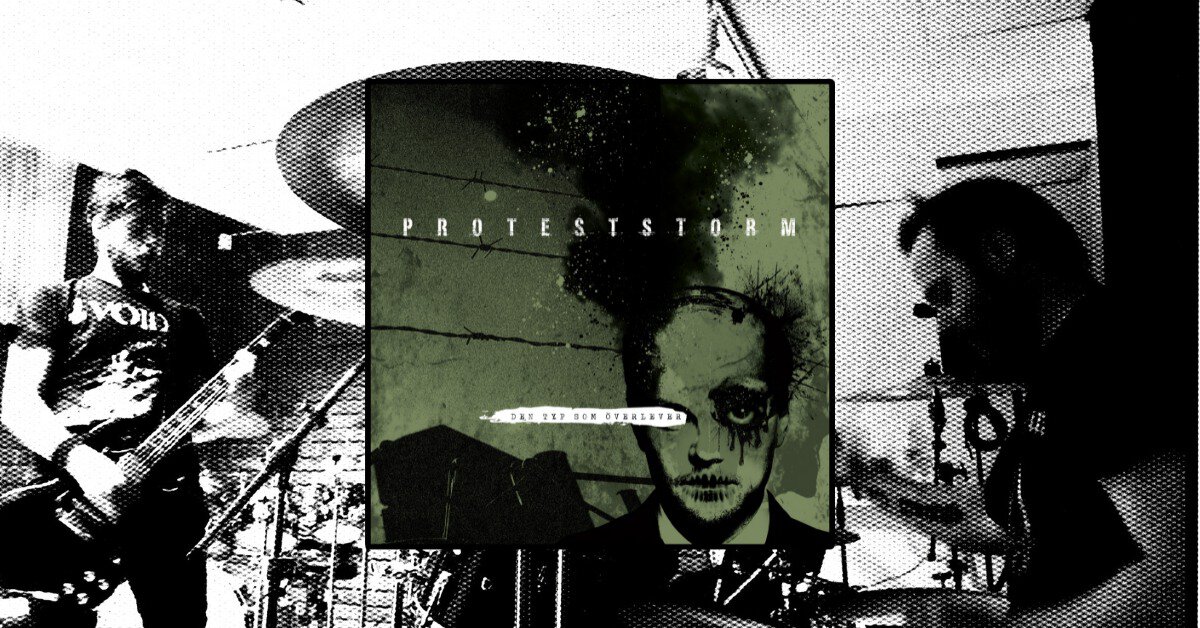
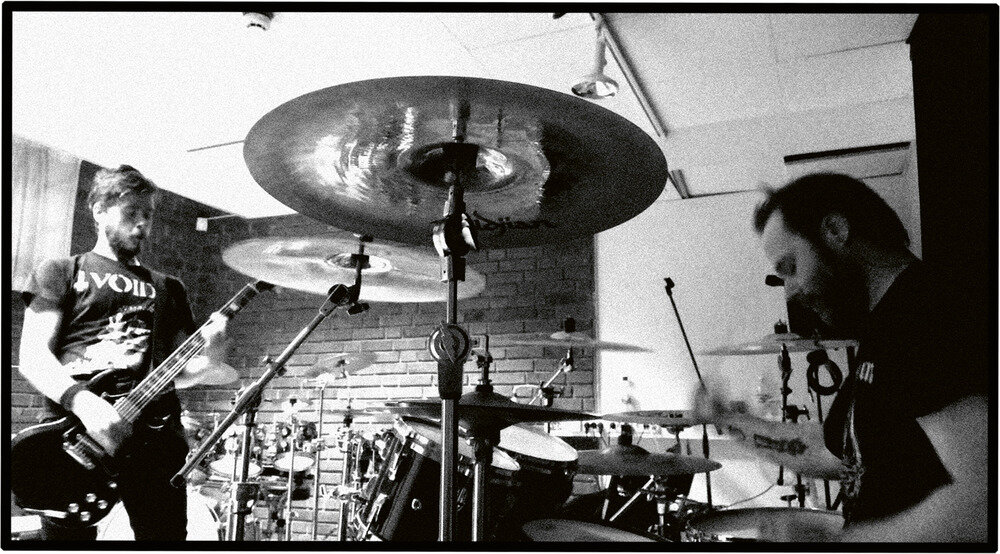
The band has only two members, but they’ve built up an impressive background over the years. That is, Kristofer Jankarls (Axis Of Despair, Exil, Faustus, Infanticide, Livet Som Insats) on vocals, guitar, and bass, alongside the beast of a crust/grind/d-beat drummer Anders Jakobson (Nasum, Krigshot, Axis Of Despair, etc.).
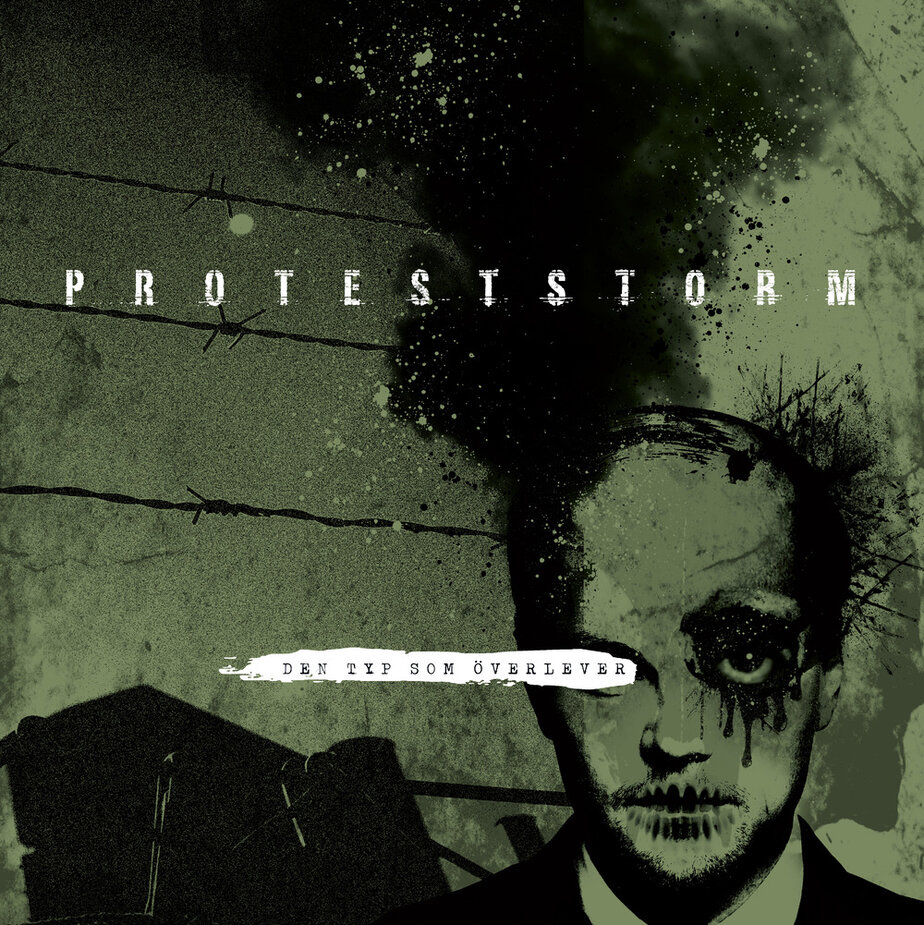
Now, Proteststorm is back with their long-awaited full-length, Den Typ Som Överlever (roughly “The Type Who Survives” in Swedish), featuring 20 ripping, relentless blasts of their Örebro mangel sound, reminiscent of legends like Krigshot, Kvoteringen, Mob 47, and more.
Den Typ Som Överlever is now out on vinyl from Fight For Your Mind and on CD from EveryDayHate. If fast, straightforward kängpunk with no room for respite is your thing, check out our interview with Kristofer and Anders below.
This year has started off really heartbreaking for me personally, and on a global scale, it feels like we’re spiraling further into the chaos of end-stage capitalism. In such times, how do you think creating fast and brutal music helps in shaping or healing the collective psyche?
Anders: Music and art in general usually benefit from darkness and crude times, so I guess you can at least see a positive outcome of the current dark days of humanity. Perhaps there is a correlation between gloomy musicians and great songs? Where’s a new Tragedy LP when you need it?!
You’ve both been involved in some incredible grind and crust bands over the years—Nasum, Krigshot, Livet som Insats, Axis of Despair, Exil, just to name a few—and both of you are some of the best musicians in the scene. Is Proteststorm more of a side project for you, given your involvement in so many other bands? And how do you feel about being lumped into the ‘featuring members of’ category?
Anders: Proteststorm is definitively a side project and nothing else! We had been playing together in Axis of Despair for a few years when we started talking about our mutual love for fast hardcore and talked about doing a Protes-Bengt kind of project where we basically wrote the songs and recorded them at the same time. In all honesty, we wrote the songs for the first 7-inch one day and recorded them the next day. The following recordings were more or less the same, perhaps a few days of rehearsals and at some point, a few songs were written at home first. That said, I think Proteststorm qualifies as a side project. Nevertheless, the songs aren’t any quick joke songs thrown together in a hurry. The songs are serious, and I like them a lot. As for the “featuring members” thing, that doesn’t bother me at all.
The name Proteststorm gives an idea of the band’s message, but since your lyrics are in Swedish, can you tell us more about the tracks on your new album out on Fight For Your Mind Records?
Anders: First of all, the album contains songs from three different sessions, going back to 2017, 2018 and 2021.
In 2017 we did our second writing/recording session where we did ten songs that initially were intended for two split 7-inch EPs. One with Massgrav, which was released some time later, and one with another band—that later got changed to yet another band—and then nothing happened with any of the bands. The songs remained unreleased. Then in 2018, we did our third writing/recording session and did twelve songs which could have been a perfectly fine 7-inch EP but we didn’t have a proper plan, we just recorded it. Then we began talking with Fight For Your Mind Records about releasing something and ultimately we ended up doing a fourth writing/recording session and did three songs just to have enough songs (20) for an LP. Then the release got really delayed, but that’s another story.
As explained earlier, Proteststorm is a project that works very fast, so none of the lyrics have been written and rewritten and worked on for weeks or months. They are done very quickly, but still most of them are about serious subjects but perhaps written tongue in cheek. Some of them are quite funny, but as they are written during the recording sessions some of them are topical regarding what was going on at that specific moment. It’s quite fun when you read them because you can easily see what inspired them. In general, they are typical punk lyrics.
In recent years, we’ve seen autonomous spaces being evicted, increasing state repression, bands breaking into the mainstream, and tensions within the punk scene (particularly in Germany) over issues like Palestine solidarity and resisting the ongoing genocide. What is your approach to the more political and militant aspects of punk, both as a form of music and as a broader protest movement?
Kristofer: The world I grew up with feels like it’s completely upside down. When I was growing up, a left extremist was seen as someone standing at the barricades throwing rocks. Or burning down a fur-industry plant to the ground. Nowadays it’s just someone who thinks human rights and the environment are important stuff.
Which in a way reflects how punk lyrics are written in 2025 in the mainstream space. Everything is safer compared to the lyrics of the punk bands that made it into the mainstream in the ’90s. And maybe to some extent in the DIY scene as well. But if political lyrics scare you, perhaps punk isn’t for you.
Shout out to Vidro and Prisão who are two examples of Swedish punk bands that aren’t scared to be political!
The Swedish scene in the early ’80s was shaped by two distinct traditions: the Discharge-influenced sound (Shitlickers, Anti-Cimex, Crude SS) and the USHC-inspired sound (Mob 47, Svart Parad, Crudity, etc.). Over time, terms like kängpunk, råpunk, and mangel have become part of our vocabulary. Let’s pretend I don’t know much about this, can you explain the defining characteristics of the Swedish hardcore punk sound? Where do Proteststorm and other related bands like Krigshot draw their influences from within this tradition?
Anders: Wow, that’s a tough question… I think it’s easier for someone non-Swedish to describe the Swedish hardcore sound. I honestly believe that even the harshest Swedish punk is related to Swedish traditional folk music in some weird way. It might have been more or less erased along the way, but there are probably tiny fragments left that create that Swedish sound (and obviously this goes for any country out there).
Proteststorm started with Protes-Bengt as some kind of role model, but when we actually started playing, it didn’t sound like Protes-Bengt. We picked inspiration from everything we liked, most of it older (like Mob 47, Minor Threat, Anti-Cimex, Void) and some of it more recent (like Career Suicide). Many songs have titles that more or less are a Swedish translation of the band that inspired the song, or other references to certain bands. It’s quite fun writing songs without limitations. There are songs that have been inspired by DLK (Swedish melodic punk rock) and Morbid Angel (death metal). I dare you to find out which ones they are…
Let’s talk about the current Swedish scene… Does it feel as big and powerful from the inside as it seems to outsiders?
Kristofer: Wow, another tough one answering from someone on the inside. But I can say this: For a while, it felt like I was the youngest one at shows, even as I aged. But in recent years, I’ve seen a major change. More kids start going to shows, playing in bands and organizing stuff, etc.
An example: WipeOut from Stockholm. A cool new band with no 40+ members, haha!
How do you feel about the current model of music release and distribution? With an infinite amount of music out there, whether it’s buying vinyl on Discogs or listening to curated playlists on Spotify, it still seems to contribute to fueling a consumerist culture. What’s your take on this?
Kristofer: This is also a tough question. For instance, Bandcamp came from the right place with their heart at the right place, but they got bought up and monetized instantly. And the idea that some Swedish walking penis, who gave shitloads of money to Trump’s campaign, controls what is allowed on his Spotify platform is somewhat alarming.
Consumerism fucking sucks too. But a vinyl is forever (at least until I die), and no one can try to monetize or delete it from me in an instance.
Thank you for your time! Is there anything else you’d like to add or share with our readers?
Anders: Thanks for the interview. It’s Proteststorm’s first! I told you it was a project! The LP is out now, and all the older records are available digitally at Bandcamp or wherever. If someone needs a band for a split 7-inch EP, we actually have a few songs recorded without a proper home.
Just get in touch: [email protected]
Follow Proteststorm on Bandcamp and get the new LP from Fight For Your Mind Records.


