Contra La Contra & the Exodus of Political Punks From the Post-Soviet Space: An Interview With Emiground Records
In conversation with Emiground Records about the reissue of Contra La Contra's legendary 2002 LP and the legacy of DIY political punk in the post-Soviet space.

On January 26, Alexander Lukashenko claimed another victory in the Belarusian elections, tightening his dictatorial grip on the country he has ruled since the first post-Soviet election in 1994.
His opponents, many now in exile, call it yet another sham vote, arguing that Lukashenko has turned Belarus into a platsdarm for Russia’s warfare on Ukraine and a vassal state of Putin, whom he openly calls his “elder brother.”
The DIY hardcore punk scene in Belarus has long stood against authoritarian rule and political repression, but many of its members fled the country after the brutal crackdown on mass protests following Lukashenko’s 2020 re-election.
Calling themselves an “anti-state, anti-fascist, anti-capitalist” hardcore punk band, Grodno’s Contra La Contra were one of the most influential DIY bands in Belarus’s politicized early 2000s scene. The band released two demo tapes around 2001, followed by their only album, Ни слова о политике (No Word About Politics), which came out on vinyl in 2002 through the Germany-based based label Alerta Antifascista; the same year the band toured Europe with 35 shows in 38 days.
Following the 2025 elections in Belarus, DIY Conspiracy spoke to the main person behind Emiground Records, who are reissuing the legendary Contra La Contra’s LP. The label’s mission is to support hardcore punk bands from the post-Soviet space, many of whom have been forced into exile due to political repression and an atmosphere of fear.
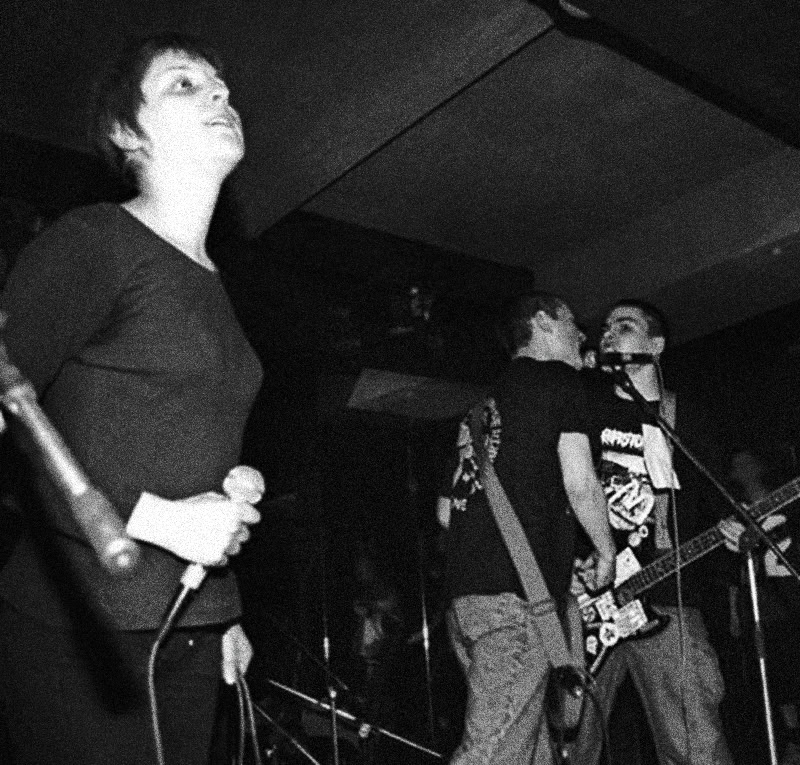
Can you start by sharing a bit of the history behind Contra La Contra? Did you ever have the chance to meet the band, considering they never played in Russia? Is it true that many of their shows in Belarus were shut down by the police?
Unfortunately, I’ve never been to a Contra La Contra concert, but I’m friends with the band members and have seen their other bands play. Contra La Contra actually did perform in Russia, and one of their shows in Moscow was connected to the legendary fight with the Nazis in the subway at Baumanskaya station.
Those were terrible times in terms of street violence, there were murders and constant attacks, so people always traveled to and from concerts in organized groups. This show was no exception. There were several dozen antifascists at the station, and a few of them were outside, finishing their cigarettes near the entrance. That night, Nazis were hunting punks in the area, and when they spotted these guys, they attacked. The antifascists ran inside the station, with the Nazis chasing after them. They ran down the escalator—one of the deepest in the subway system—without realizing that about a hundred antifascists were waiting at the bottom. By the time they understood what was happening, it was too late. They were trapped, and what followed was a legendary massacre. Pyotr “Pete” Silaev described it in detail in his book Exodus. For example, one of the Nazis, a well-known figure, even cut his wrists to get away from him.
It was a dark time in Belarus as well. But while in Russia the main enemy was the Nazis, in Belarus, it was the police. Many concerts were shut down, and not just concerts. Dima, a member of Contra La Contra, once told me about a time when the police violently arrested them near their rehearsal space. It was like something out of a movie—flashing lights, guys lying face-down on the asphalt, the whole scene.
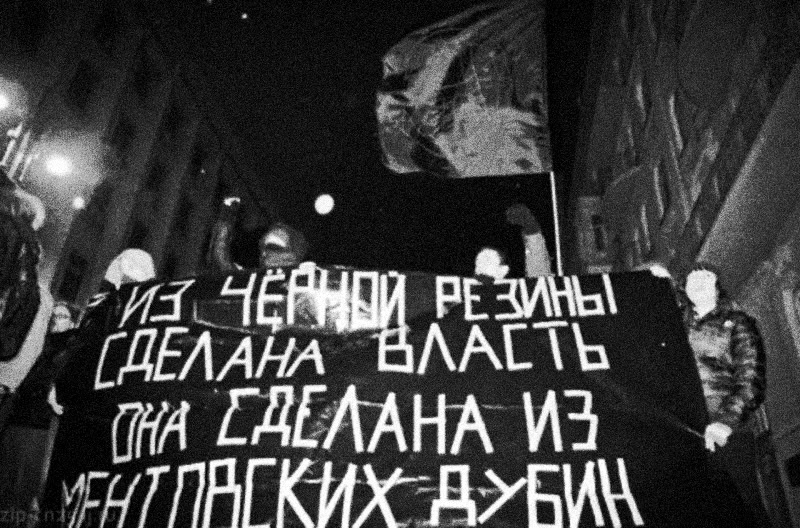
Lukashenko has ruled Belarus since the country’s first elections in 1994, and songs like “Путин – убийца” (Putin – Murderer) and “Лука заебал” (Fuck You, Luka) remain just as relevant today. However, perhaps their most iconic and widely covered track is “Из чёрной резины сделана власть” (The Authority Is Made of Black Rubber). Can you go a bit more into the lyrical themes of Contra La Contra’s music and discuss their influence on other bands in the region? Is it true that their lyrics can be heard at protests and antifascist demonstrations across all Russian-speaking regions?
I have to say that “Из чёрной резины сделана власть” is actually a cover of the band Собаки Павлова (Pavlov’s Dogs). But it was Contra La Contra’s version that became canonical.
As for their songs, you’re absolutely right—Contra La Contra is one of the most quoted bands in the post-Soviet punk scene. And it’s not just “The Authority Is Made of Black Rubber”—other songs, like “Выйди на улицу, верни себе город” (Go Out Into the Street, Take Back Your City), have also left a mark. In fact, that song is officially recognized as extremist material in both Belarus and Russia.
You know, when a young scene emerges, it needs to establish its canon—to lay the foundation. To voice truths that seem obvious only after someone dares to say them out loud. And Contra La Contra is exactly that kind of band. Their songs covered all the key political themes fitting for punk rock. Contra La Contra is like Craig O’Hara’s book The Philosophy of Punk, only without the straight edge.
Contra La Contra come from Grodno (Hrodna), a city near the Polish border with a notable political punk scene dating back to the 1990s with bands like Deviation. Can you share your perspective on the importance of Grodno for the punk scene in Belarus?
Grodno’s punk scene was hugely important—not just for Belarus, but for the entire post-Soviet space. People looked up to Grodno from Irkutsk to Kaliningrad. The most furious, the most political, and endlessly anthemic bands came from there. And it’s not just about Contra La Contra. Monday Suicide, Bagna—they’re also from Grodno. And, of course, one of the most influential, if not the most influential, SHARP bands in the post-Soviet space, Mister X, is from Grodno as well.
Grodno is a unique case. It’s a small town that, for some reason, produced so many active and talented people. There are other border towns, but it was in Grodno that one of the most powerful local punk scenes emerged.
Given Grodno’s proximity to Poland, many punks from the city emigrated there, likely to avoid imprisonment. Members of Contra La Contra also left Belarus and went on to form bands like Limp Blitzkrieg in Poland. Is that correct?
That’s right, the band members now live in Poland. Zhenya Masal has been there for a long time. We met in Warsaw at the A.D.A. Puławska squat in 2019, and, by the way, that’s when the conversation about the Contra La Contra reissue first started.
Dima Masal left for Poland after the events of 2020, and the brothers reunited—finally! Mark my words, if these guys put a band together, it’s gonna be the bomb!
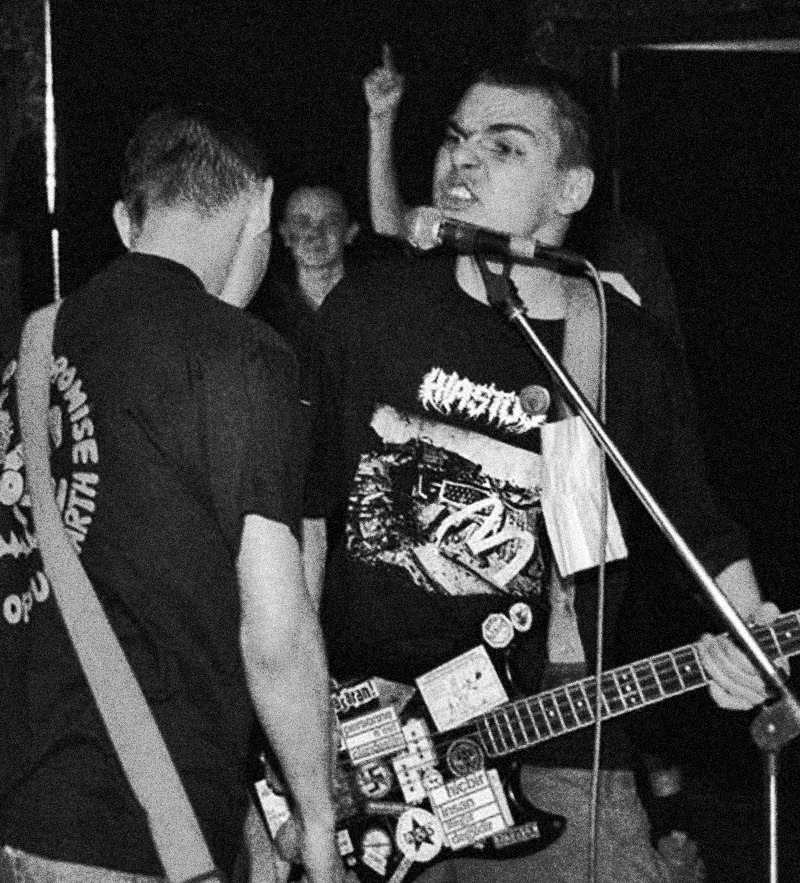
Do you want to talk about the state repression against political activists and members of the DIY punk scene in both Russia and Belarus since the start of the full-scale war in Ukraine? Can you share your insights or experiences regarding the repressions, emigration, and the current state of the punk scene in these regions?
I’m from Russia, so I can only speak about the situation in Belarus based on what my Belarusian friends have told me. And as they joke, there is no punk scene in Belarus anymore, because all the punks have left. Of course, that’s an exaggeration—there are still people from the scene in the country, but there’s some truth in it. A huge number of people, including punk activists, have left Belarus. I even know people who left together with their parents and grandparents, whole families emigrated. I haven’t heard of cases like that in Russia. But it’s understandable, there is no repression in Russia on the same level as in Belarus.
Repression in Belarus has been going on for a long time, but after the rigged 2020 elections, it felt like the whole country took to the streets—not just political activists or radical youth, but everyone, from pensioners and teachers to businessmen and even football hooligans. Just like in the Contra La Contra song “Выйди на улицу…” (Go Out Into The Street). And the authorities reacted brutally—with mass arrests, torture, and even murder. And the repression hasn’t stopped. I know people who are still leaving Belarus today because the police are coming to their homes over things that happened in 2020. The authorities are still arresting people for activism from back then.
Russia is different. When the war started, I was sure we would have our own version of Belarus in 2020. I thought that Russians, who had tolerated so much injustice and lies, would never tolerate a war against Ukraine. But there were no mass protests. It was a huge disappointment. That’s why I left Russia, I suddenly realized that nothing would change. Everything would go exactly as Putin wanted. And unlike Lukashenko, he doesn’t even need to disperse protests.
I left in 2022, so I only know what’s happening in Russia now through my friends. From what they say, it seems like people have accepted the war and the new reality, and they’re just trying to survive in it. In the Soviet Union, there was a term for this—internal emigration. It meant that when people realized there was no point in actively resisting the system, they withdrew completely into their private lives and ignored the political reality. Thousands of people lived this way, taking low-level jobs as janitors or night watchmen just to avoid dealing with the system. It seems to me that Russia has now gone into this same kind of internal emigration. At least politically, that’s for sure.
Many people have left. There are no official numbers, but some estimates say up to a million. A huge number of people from the punk scene have emigrated, and in places like Tbilisi, they’ve even created new punk scenes in exile.
But many have stayed. And life in Russia still goes on. Punk concerts, festivals, new releases—they’re still happening. People keep doing what they know, what keeps them afloat. It reminds me of the “swing kids”, the subculture of German youth who loved jazz and American music under the Nazi regime. It was a form of escapism, but also an attempt not to break down completely.
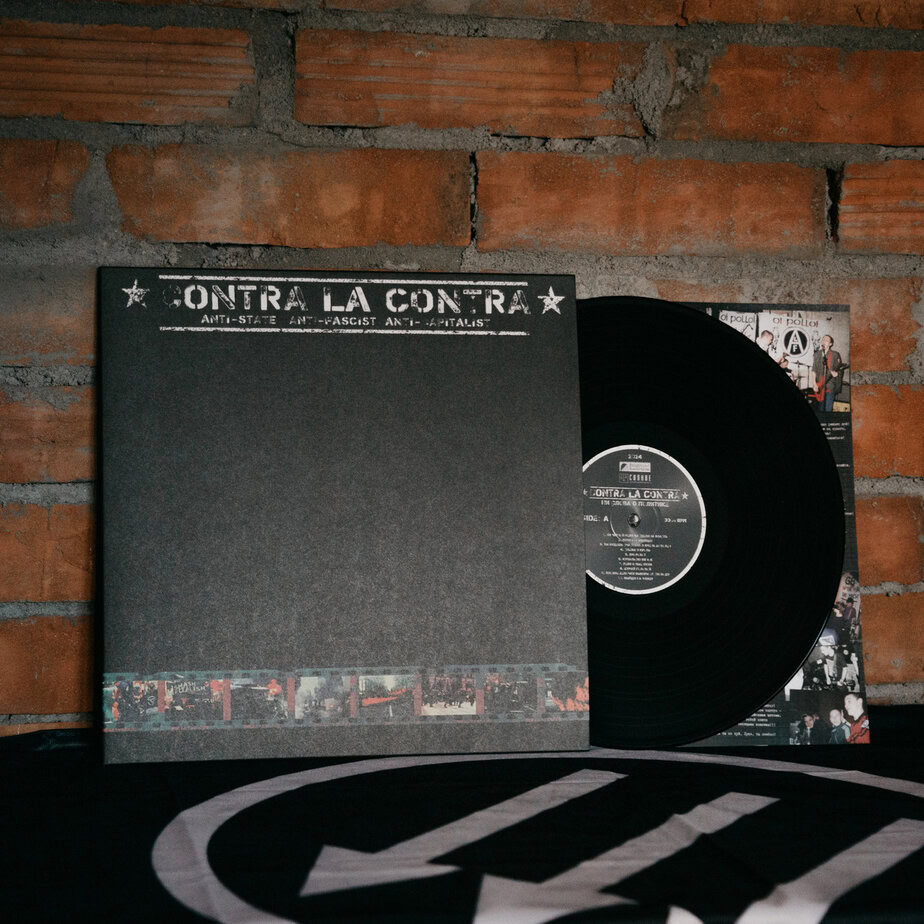
Contra La Contra’s only album Ни слова о политике was originally released on vinyl by Alerta Antifascista in 2002, let’s talk about your reissue of the record. Will the songs be remastered and what will be different from the original pressing?
We’ve done some additional sound remastering for this version, so the record should sound great! We also expanded the booklet, there are more photos, more posters. Overall, this new reissue will be a treat for collectors, we put a lot of effort into the design. Dima Masal dug out all the old dusty posters and photos from under his bed and handed them over to us.
The last question is about the story of your label and any other releases you have planned. And finally, what are some current bands from Russia, Ukraine, Belarus, Georgia, etc. that you would like to recommend checking out?
I ran a punk rock label when I lived in Russia, and I want to continue doing it in emigration. So I decided to start a new label here. A lot of punks from Russia and Belarus have emigrated, and some of them are forming new bands in exile. I plan to focus on them in particular.
For example, a band called Sick Fucks has come together in Tbilisi. They play great hardcore punk, and we already have a preliminary agreement to work together. There are also a couple of new bands made up of Belarusians forming in Poland. And of course, I will continue to actively support my Ukrainian friends and help spread their music.
Alongside the Contra La Contra reissue, I’m also preparing another release, which should be out very soon. But I won’t reveal my cards just yet, let’s keep it a secret for now.
In Russia, I highly recommend checking out Поспишь Потом (Pospish Potom). In my opinion, they’re one of the best punk bands in the country right now. They might even go on tour this spring through Georgia, Armenia, and Turkey.
In Ukraine, my friend Denis Left from Odessa recently recorded a new album with his band Flame, and it turned out great—classic ’90s-style melodic hardcore at its best.
And in Belarus, for my taste, the brightest star remains Петля Пристрастия (Petlya Pristrastiya). It’s not exactly punk rock—they play thoughtful post-punk, alternative rock—but the band includes veterans of the Minsk hardcore scene, like members of Devil Shoots Devil, among others.
Ни слова о политике’s reissue is available to order from Emiground Records, follow the label on Bandcamp and Instagram.


