Fast, Political & Anticapitalist: An Interview with Res Gestae
In conversation with political hardcore band Res Gestae from Colombia.
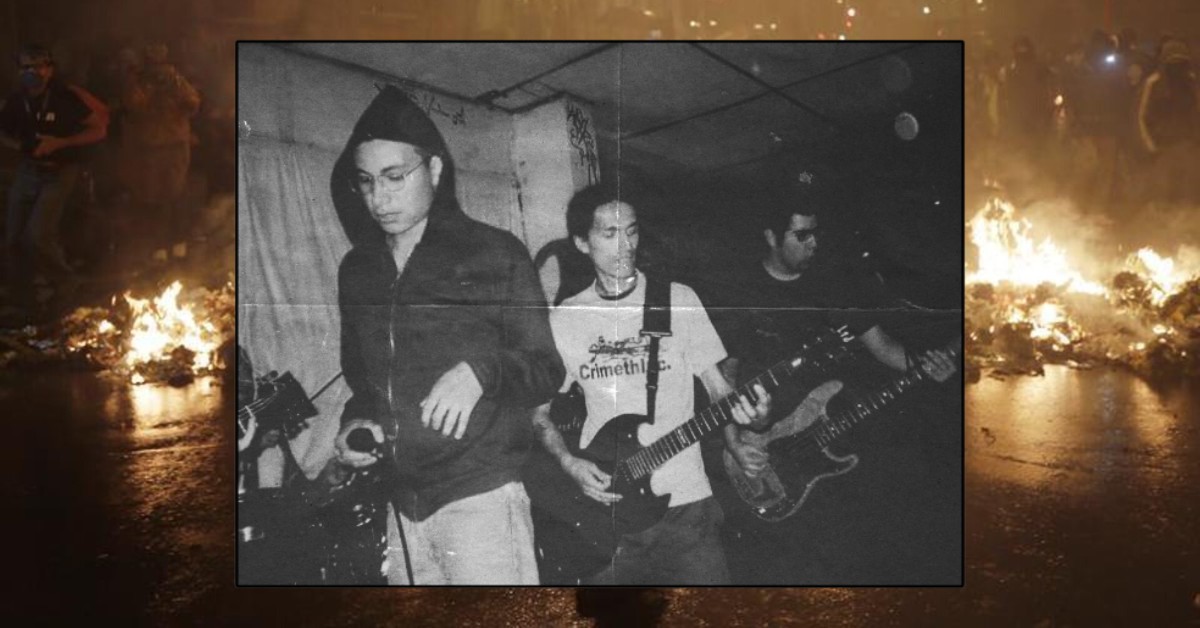
Res Gestae is a fast-paced hardcore band from Colombia, South America. They are heavily involved in local anarchist and anti-authoritarian initiatives, both on a social and countercultural level.
Great to talk with a band from Colombia. First, can you represent the band members—who plays what, line-up changes…
OK, this is Res Gestae’s current line-up: Montag—Guitar, Max Power—Guitar, Sara—Vocals, Dark Soul—Drums, Paria—Bass. In the past we were a four-piece band. We added a guitar player (Max Power) three years ago, and we have changed one vocalist and one drummer.
How long have Res Gestae been together?
5 years.
Are you all vegetarians and straight edge?
Well, we have been vegetarians for a long time and we continue being vegetarians at this moment. When we started the band we were also all straight edge for a long time, but right now our vocalist is not straight edge anymore. I guess that is typical of most SXE bands around the world, but the thing is that we decided it was better to continue playing with our vocalist than to kick him out of the band just because he had changed his position towards alcohol. In this sense, straight edge is a very important issue for some of us at Res Gestae, but it is not the main focus of our band.

For what are your lyrics all about and are they especially in Spanish?
Our lyrics deal mainly with Colombia’s social and political situation. We talk directly about the fucked up things that are going on over here: police repression, paramilitary activity, etc. We also have other lyrics that highlight our aim of forming a free culture, a collective way of life where hierarchy and oppression can be reduced to a minimum level.
Right now we are writing lyrics about various issues that happened in the last couple of years. For example, we recently wrote a lyric about a 15-year-old anarchist who was killed by the police during a May Day demonstration.
Can you give us an insight into the Colombian hardcore community and the social/political situation in your country at the moment? Explain a little bit how day-to-day life is going for young people there.
The Colombian hardcore community started as such in 1996. Before that there were a few bands, but it was especially in that year that a scene started to grow. Some of us were involved at that time and we used to play mostly NYHC stuff. The scene was oriented towards “brotherhood, loyalty, commitment”, haha. After some years things changed a lot and many bands started to talk about political issues and the shows changed a little bit. The whole Colombian situation was a great influence for many of us and we were shocked by it. Also we found out about other hardcore experiences around the world that took the scene in a more countercultural manner.
Now the hardcore community is very diverse. You can go to a show every two weeks and you can find everything from the typical NYHC type of thing to more DIY political activities.
The social/political situation over here is really complicated. Basically, the current situation is the product of a long history of oppression and war. Right now there are two main Marxist-Leninist guerrilla groups that fight for power and a paramilitary army that fights against the guerrillas and the general social left movement. We have a really authoritarian and dangerous president who is also bowing down to Bush’s politics. The most important issue right now is that quite a lot of congressmen are now in jail because they are linked with paramilitaries. Some people from CrimethInc. recently wrote a report in English about the Colombian situation and anarchist activity over here for their blog. So if you can, please visit their website and read it.
And what about nationalism, corruption, and drug wars?
Patriotism is one of the beloved tactics of the current president. The media is filled with messages of Colombian pride and the majority of the population believes that. However patriotism is not used only by the right; the left parties also talk about it and use it as a way of defending the country’s sovereignty. Corruption is a common thing around Latin America, most politicians use their public power to steal money. Specifically in Colombia, corruption is also linked with paramilitaries and in this way with drugs. Drug wars were related in the ’80s with the drug cartels in different cities; right now they are mostly related to the “civil war” that we are living through.
The drug issue is really complicated and has to be analyzed from different perspectives, because everybody benefits from this “illegal” economy. Some of us think that the greater problem is the consumption of drugs and not so much the production. We think that a solution may be related to making drugs legal. This is really important because at the moment the US and Colombian governments are using the drug issue as an excuse to attack social movements and to take control over territories.
What do you think of Simon Bolivar and what kind of lessons can we take from history?
Simón Bolívar did very important things back in the day. We think it is interesting to read his books and find out about his actions. Right now the Venezuelan, Ecuadorian, and Bolivian governments are trying to actualize Bolívar’s ideas. Also the guerrillas in Colombia have a similar ideology. However, for us anarchists, these ideas are not our first source of inspiration.

I know that it’s not easy to move from country to country in South America. How does this affect your tours? Can a Colombian band tour all of South America successfully?
It is not easy to do it, but we managed to tour Brazil a couple of years ago. We went from Colombia to Argentina in a six-day bus trip and then directly to Brazil. For us it was an awesome experience. Making a tour over here is difficult because you won’t make back the money that you invested. However, there are a lot of really nice and awesome people that will help you out with food, places to play, and places to sleep. During our tour we met a lot of amazing people, saw really good bands, and visited interesting places. I guess that you can learn a lot when you travel around South America in a DIY manner.
What is the role of DIY record labels? I know there are some record labels in Latin America that distribute and edit music without bands’ permission. And there are really DIY record stores in Colombia, Venezuela, Bolivia, and Peru selling CD-Rs and vinyl of international bands.
Yes, DIY labels are now common. You can find labels like Dirección Positiva, Persistencia Records, Vendetta Records, Stepdown Records, etc. These people usually do everything DIY and release mainly Colombian hardcore punk bands. Sometimes DIY labels also do international editions, but they usually talk with the bands first and work something out.
Can you explain something about the benefit concerts you play? I know you play a lot of animal rights benefit shows…
We have played a lot of benefit shows like the ones done for political prisoners by the Colombian ABC and the yearly Verdurada. The name of this last show was taken from a festival done in Brazil. Over here the Verdurada is mostly a show related to animal liberation where people watch videos or attend conferences about this issue and eat free vegetarian food.
What do you do outside the band? Are you involved in any collectives, organisations, distros, animal rights groups?
Some of us have a label called Dirección Positiva and we are involved in a collective called Contracultura. Others are also involved in the Crimental Collective (CrimethInc. Español).
Anything to add?
Thanks a lot for the interview! I hope that this serves as a bridge of communication and that we can learn more about what is going on over there and expand the countercultural international network.
